Updated July 30, 2025 01:23PM
What You Can Learn from the Wear Pattern on Your Running Shoes
With today’s varied shoe designs and modern materials, the answer is: It’s complicated.
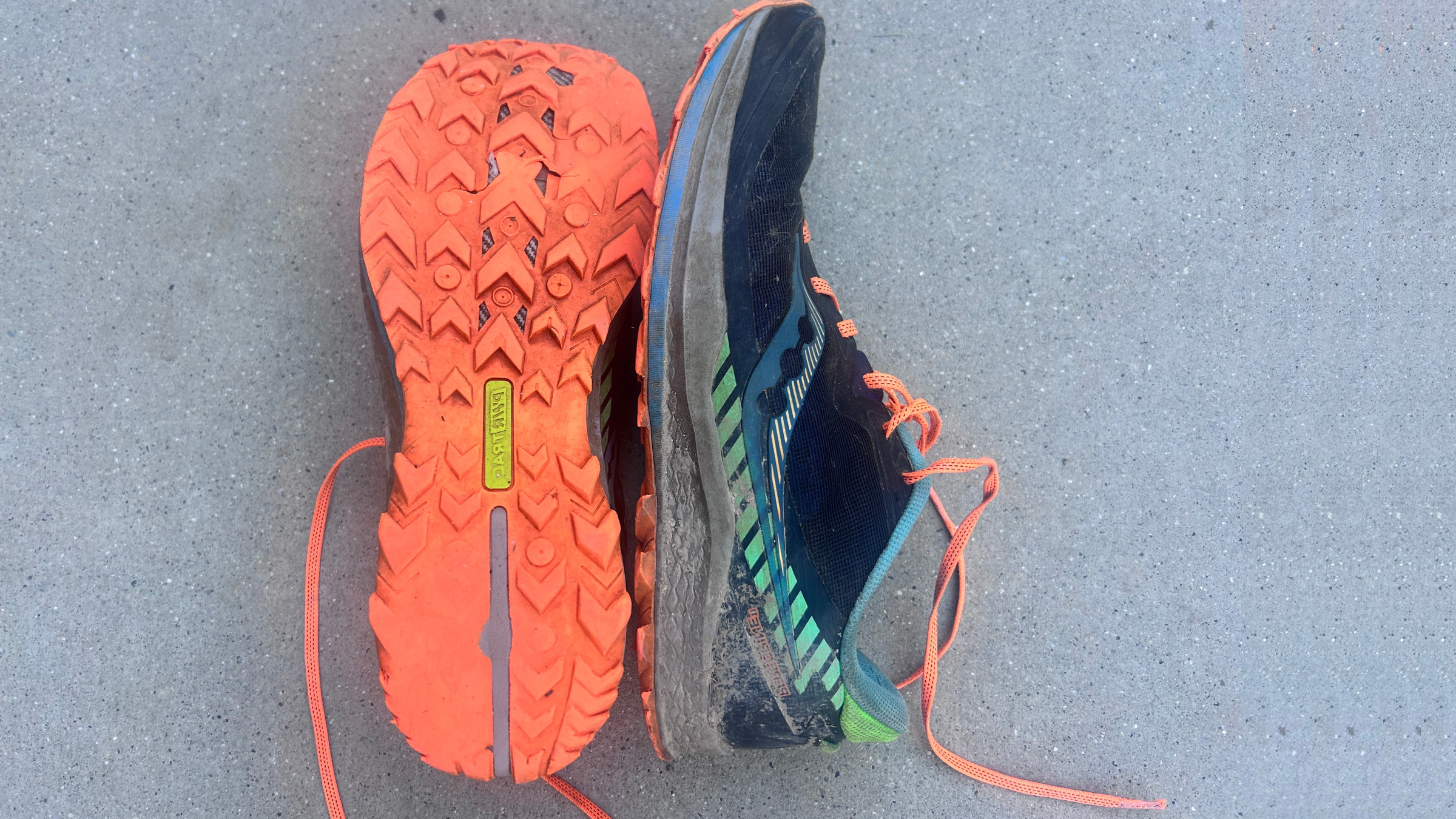
(Photo: Ali Nolan)
It used to be common practice for a running shoe store salesperson to look at the bottom of the customer’s shoes before recommending what to buy next. They’d assess how worn out the tread pattern would be on the medial side compared to the lateral side, from the heel to the midfoot. And then they’d say something impressive and wise and prescient like, “This tells me you should be in a pronation control shoe!”
With footwear evolving greatly over the last two decades, with varying stack heights, rocker shapes, and materials affecting how quickly a person’s outsole breaks down (and where), the process has become a bit more complicated.
Increased knowledge about individual running gaits and the human body and how each person’s gait interacts with different types of shoes also adds complexity to the issue. If a person who pronates, for instance, is wearing a stable shoe, they’ll show less wear on the medial side of a shoe than they would in a neutral shoe. And if a person who heel strikes shows wear on a shoe with a 12mm drop (difference in heel stack to forefoot), that same person may show less wear on a shoe with a 6mm drop. So what, if anything, can the wear patterns on our shoes inform?
Can Wear Patterns Still Be Useful?
Jay Dicharry, physical therapist and sports clinical therapist, doesn’t recommend looking at shoe tread patterns at all. Instead, he looks at his patients’ callus patterns on bare feet to help figure out what’s going on with their gait or causing them pain. “If you put one person in different types of shoes, stability, cushioned, rockered, super shoes, etc., you’ll get very different wear patterns on the bottom of each shoe,” he says. “But wear patterns on the bottom of the foot show where there is shear across the foot,” he says.
John Dewey, owner of Fleet Feet in Greensboro and High Point, North Carolina, who is also a physical therapist and certified athletic trainer, explains how looking at wear patterns is more important with newer runners and runners experiencing issues than it is for seasoned runners just needing a new pair of shoes. “We will examine the wear pattern of their shoes for any clues that might help us find footwear that will work for them,” he says. But he places more importance on the answers to questions about how many miles a week a person runs or walks and where, if they’re training for anything specific, if they have a history of back or lower extremity injuries, and if certain shoes have worked or not worked for the customer previously.
ADVERTISEMENT
“Like with many things,” he says, “if you ask the right questions and listen to the customer, they will often tell you (many times indirectly) what will likely work for them.”
When Wear Patterns Raise Red Flags
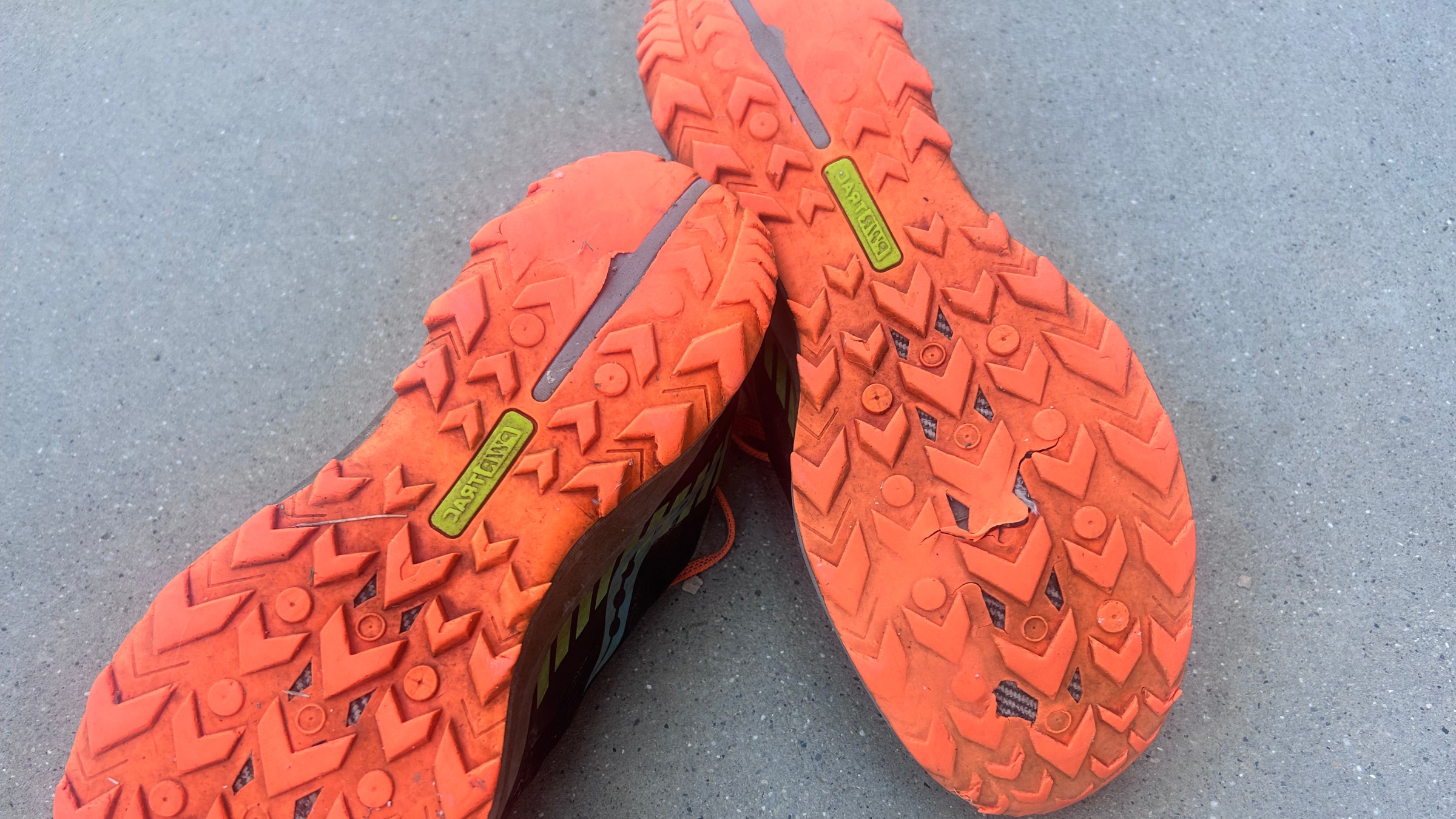
However, Dewey says that he’s seen many runners and walkers who have demonstrated a very worn pattern on the medial aspect of their shoes and who have complained of medial knee pain. “With these individuals, we typically try to get them a more supportive shoe, as long as it feels comfortable and natural to them,” he says.
An excessively worn outsole on the lateral side often comes with ankle discomfort, or apprehension of spraining an ankle, according to Dewey. “For these individuals, we often examine shoes with lower drops,” he says. “Upon heel strike, the runner’s ankle is dorsiflexed and foot is inverted. If the heel stack height is much higher than the rest of the shoe, they may have more difficulty transitioning to the middle of the midfoot and forefoot compared to a shoe that might be able to ‘get the heel out of the way’ or assist with the transition.”
ADVERTISEMENT
Mark Plaatjes, owner of Boulder, Colorado’s In Motion Running shoe store and physical therapy office, says that he looks at wear patterns to inform things like whether a person is running symmetrically or asymmetrically. If it’s asymmetric and the person is experiencing pain, he might suggest an insert or orthotic. But if their wear patterns are asymmetrical and they’re not experiencing any pains, and have no problems with the shoes they’re in, the shoes they’re in may be working for them just fine. There’s no reason to fix what isn’t broken.
He also looks at where shoe wear patterns appear, on the outside heel, lateral forefoot, medial forefoot, for instance. “All this can tell you if they are in the right shoes, if they have a leg length discrepancy, if they pronate or supinate, and also point you to what their injury could be,” he says.
When to Actually Change Your Shoes
Dewey imparts that he would only change a shoe model for a customer if they were experiencing an issue that is affecting their gait and causing them pain. “The wear pattern examination can give us clues as to which other brands or models might work better,” he says. “However, I think the only situation in which I might change a brand or model based on wear pattern would be if the customer’s shoes were much more worn in a particular area than I would anticipate, given the time frame, or if the wear was so excessive that I became concerned that they would likely develop an injury.”
ADVERTISEMENT
Plaatjes agrees. “If a customer’s shoes are wearing out quicker than they should, that tells me that maybe they are in the wrong shoe,” he says.
Both Plaatjes and Dewey only use wear patterns as part of the puzzle. “Observation or gait analysis is such an important part of finding the right footwear because sometimes we don’t see significant wear patterns but do note issues with biomechanics, and vice versa,” Dewey says. “We might see odd wear patterns, but the customer has no issues and a relatively efficient gait.”
The takeaway is that, if you’re experiencing pain in your running, you shouldn’t self-diagnose–and then shop—based on the wear pattern on the bottom of your shoes. Instead, wear your current shoes to a reputable specialty retail store or physical therapist and be ready for a conversation. And, yes, if the salesperson or PT asks, offer up the shoes on your feet, bottom side up.
