Updated July 10, 2025 02:27PM
If you buy through our links, we may earn an affiliate commission. This supports our mission to get more people active and outside.Learn about Outside Online's affiliate link policy
Easy-Day Cruiser: Brooks Ghost Max 2 First Run Review
The updated Ghost Max delivers a smooth, rolling ride at slower paces and gets high marks for comfort, consistency, stability, and durability
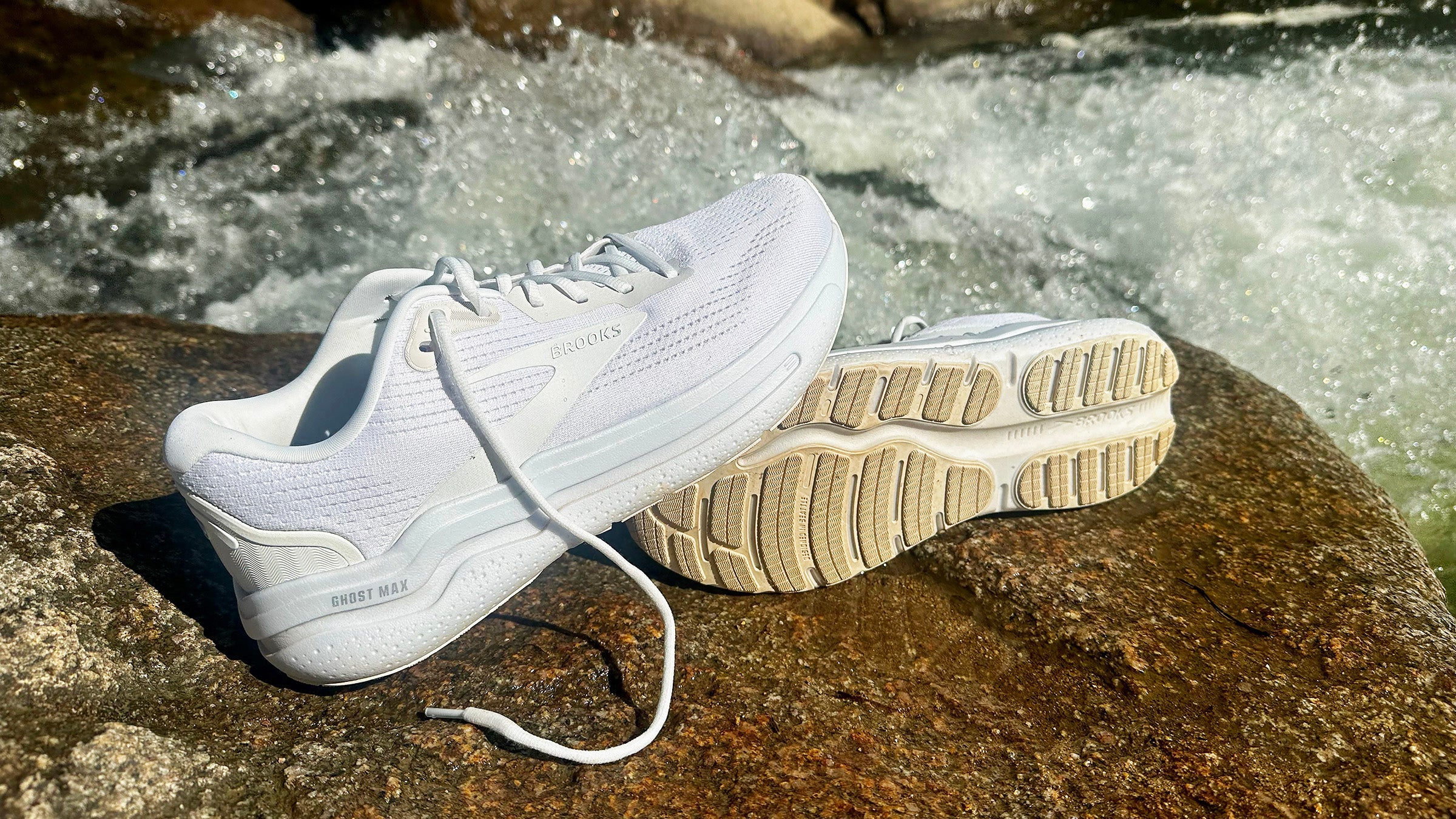
The Brooks Ghost Max 2 is a dependable companion if you're headed out for an easy cruise. (Photo: Brian Metzler)
When maximalist running shoes first hit the scene in the early 2010s, I recalled being relieved, as they were a refreshing change from the harsh sensations of the ubiquitous, “barely there” shoes that were making the biggest buzz at the height of the minimalist movement. Nowadays every running shoe brand has high-stack, maximally cushioned training shoes in its lineup, and many have maximized versions of classic models, like the Brooks Ghost Max.
Not all maximal shoes are created equal, however, so you have to understand what each one excels at. It’s less about the similar stack heights and more about how the properties of the midsole foam interact with the shoe’s geometry, sole, upper, and sometimes embedded plate. Some max-cushioned shoes are geared for racing, some are designed to be up-tempo trainers, some are meant to be versatile everyday trainers, and some—like the Brooks Ghost Max 2—are best for easy-day running. Smooth, semi-soft, flexible, and stable—with a subtle sense of responsiveness to boot—it’s a competent everyday training shoe that’s ideal for running slow to moderate paces.
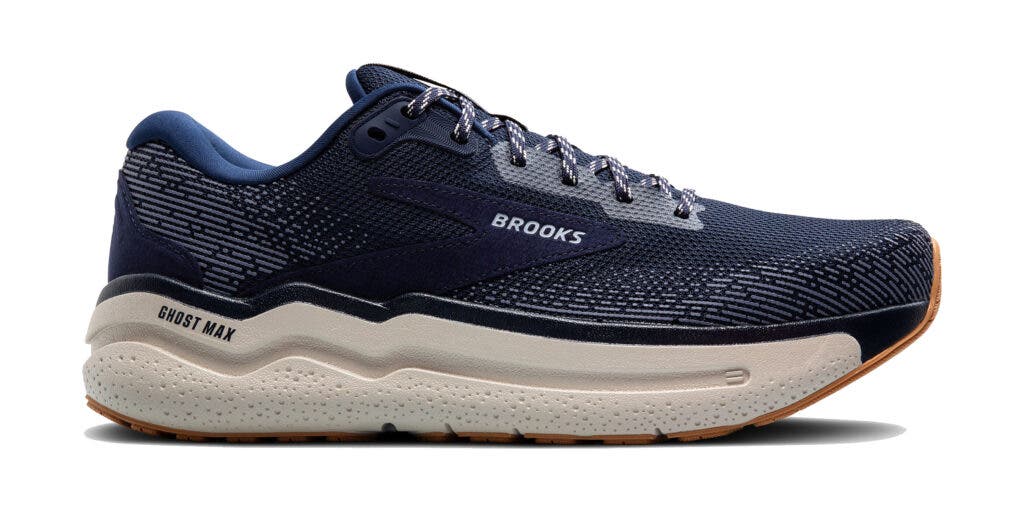
Brooks Ghost Max 2
Weight: 9.2 oz (women’s size 8), 10.8 oz (men’s size 9)
Stack Heights: 39mm (heel), 33mm (forefoot)
Heel-to-toe Drop: 6mm
When you buy through our links, we may earn an affiliate commission. This supports our mission to get more people active and outside. Learn more.
ADVERTISEMENT
At a Glance
Pros
- Rockered geometry helps creates smooth heel-to-toe transitions for heel-strikers
- New DNA Loft v3 midsole foam is stable, softer and slightly more responsive than last year’s version
- Wide base provides inherent stability
- Plush, cushy interior serves up long-haul comfort
Cons
- Has only two gears—slow and moderate—and is held back by long ground contact time
- Not the lightest everyday trainer available, marginally heavier than last year’s edition
What’s New
- Not a full overhaul, this shoe is similar to the original Ghost Max
- Midsole upgraded with a slab of Brooks’ slightly more responsive nitrogen-infused DNA Loft v3 material.
- A rockered geometry from heel to toe promotes a smooth, rolling sensation.
- The wide footprint and raised sidewalls provide inherent stability that enhances a neutral gait pattern and can help modulate moderate pronation.
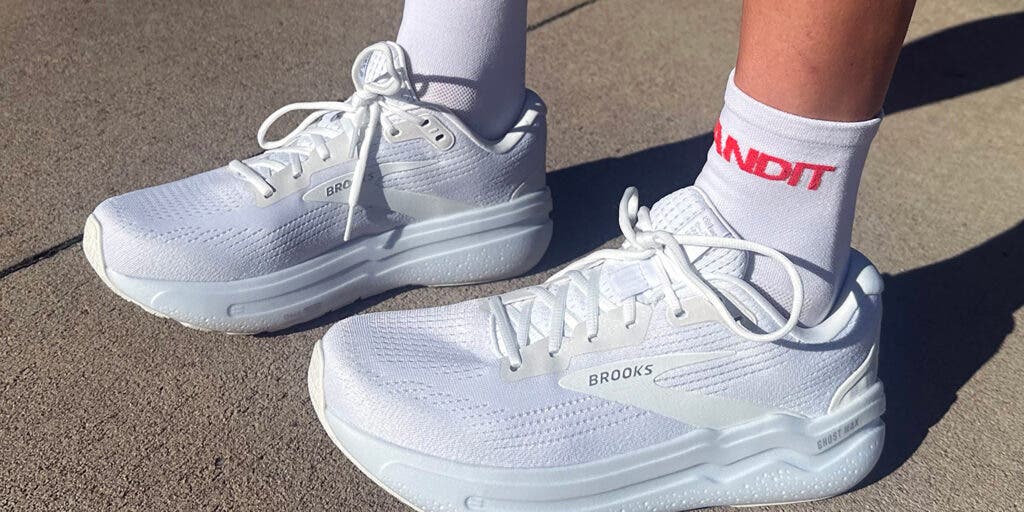
Brooks Ghost Max 2: First Impressions
Having run in each of the training shoes in the Brooks lineup the past several years, and most of the 16 versions of the Ghost, I was interested to see how the updated Ghost Max 2 would line up as an everyday trainer when I received an all-white wear-test pair this summer. I’ve now run in them about a dozen times, ranging from slow recovery runs to a few moderate long runs, a spontaneous fartlek run, one semi-fast tempo run, and a few attempts at post-run strides.
ADVERTISEMENT
Lacing them up, I appreciated the seamless, plush interior that included a thick, wide, soft tongue and a good amount of padding around the heel collar, plus a basic cushioned sockliner. Depending on how snug I laced them up, it felt like it had a medium- to narrow-volume interior with plenty of wiggle room in the forefoot. Once in motion, the comfortable step-in feel gave way to the semi-soft/semi-firm feeling of the DNA Loft v3 midsole, which immediately felt smooth and stable as my foot rolled through the gait cycle from heel-strike to toe-off.
While the shoe doesn’t feel as light as many other everyday trainers—and this version actually gained about a half ounce from the first edition—the weight wasn’t a non-starter and wasn’t an issue at slower paces.
What I liked most about the Ghost Max 2 was the consistency of the ride. Although the midsole didn’t seem very dynamic, it did feel softer, and slightly more responsive than the DNA Loft v2 midsole foam of the original version—and that’s a good thing. The more I ran in the Ghost Max 2, the more I sensed that the hint of liveliness was more of a buoyant sensation of the midsole than an energetic or propulsive sensation. I didn’t feel like my feet were immersing into the cushioning and springing off, but more hovering on top of it with help from the rockered shape of the shoe that let me roll without having to flex or compress the sole much.
ADVERTISEMENT
Floating along above the thick sole was great for recovery runs and easy-day paces that didn’t require much effort, but when I ran faster in it, the midsole didn’t feel like it put any bounce in my step—it lacked agility and any inherent poppiness. It still, however, rolled consistently and felt stable at faster paces.
On longer runs, I found I was able to rely on the consistency of the ride to carry me through easy-paced miles knowing just how I’d land and roll, although I quickly found the shoe’s limitations going up and down slight inclines and realized that it only has two gears: slow, and moderate. It’s not a shoe with a lot of giddy-up, which was evident during up-tempo spurts of fartlek efforts and also while doing post-run strides. Running faster required extra effort and a purposeful change in cadence to force quicker stride turnover that, once settled in, eventually produced a subtle sense of bounciness underfoot.
Overall, I’d give the Ghost Max 2 high marks for comfort, consistency, stability, and durability. It could be an everyday trainer, but its lack of pace versatility is its biggest limitation. It excelled at producing a smooth rolling sensation at slower paces, and that’s ultimately how I’ll continue running in this shoe.
Brooks Ghost Max 2: Who’s It For?
The Ghost Max 2 is a great choice for a new or novice runner who mostly runs at slow to moderate paces or a more experienced runner who is looking for a stable, comfortable shoe specifically for Zone 1 and Zone 2 running days. It could also work well as a shoe intended for fitness walking.
ADVERTISEMENT
Similar Shoes
Asics Gel-Nimbus 26, New Balance Fresh Foam 1080 v14, Saucony Hurricane 24, Hoka Bondi 8, Nike Invincible 3, Hoka Skyflow
