Published August 7, 2025 10:10AM
Do OnlyFans Sponsorships for Pro Runners Actually Make Sense?
Here’s how elite runners are rewriting the sponsorship playbook (with help from unexpected places).

(Photo: Ri Ganey)
In early 2025, ultrarunner Sabrina Stanley, 34, made headlines—not for a race win or course record, but for an unexpected partnership aimed at sustaining her professional running career. Her new sponsor? OnlyFans, a platform long associated with adult content but increasingly home to creators of all kinds, including athletes.
The reaction was swift. While OnlyFans’ NSFW reputation raised eyebrows, many in the running community praised the move as bold, savvy, and empowering. Ultrarunner Dylan Bowman, writing in his FreeTrail newsletter, called it an “exciting step,” applauding Stanley for using an unconventional platform to monetize her fan base and share her expertise.
For Stanley, the decision wasn’t about controversy. She said it was about autonomy, authenticity, and long-term sustainability—a reflection of a shift happening in the sport. And she’s not alone. Hurdler, Christina Clemons, for example, turned heads for wearing Doritos-shaped earrings at the 2024 U.S. Olympic Trials. The viral moment resulted in Clemons signing with the snack brand as her primary sponsor. More and more runners are moving away from traditional, endurance-industry sponsorships and toward partnerships that offer creative freedom, value alignment, and greater financial control.
ADVERTISEMENT
OnlyFans Sponsorships for Athletes, Explained
OnlyFans is a subscription-based platform where creators share content directly with their fans, who pay a monthly fee for access. Creators can also earn money by offering tips, pay-per-view posts, and personalized content, giving them control over what they offer and how they monetize their audience.
In the past two years, OnlyFans has broadened its footprint in sports. The platform has welcomed athletes and funded training and living costs, especially in niche sports where traditional sponsorships are scarce. The partnerships are intended to help athletes earn income through subscriber-supported content and promote a direct connection to fans.
ADVERTISEMENT
In addition to running, OnlyFans sponsors athletes in a wide range of disciplines, including mountain biking (Lewis Buchanan, Stefan Garlicki), surfing (Billy Kemper, Pedro Scooby), bobsled (Lisa Buckwitz), rally racing (Alba Sanchez), motorcycle racing (Josh Herrin), jet ski (Anna Glennon), and Moto2 (American Racing Team).
OnlyFans spotlights these athletes’ stories across its own media channels. For example, OFTV’s Rise & Grind is a series that offers a behind-the-scenes look at the daily routines, training regimens, and motivations of athletes using the platform. The OnlyFans blog also features interviews and profiles that dive deeper into their personal and professional journeys.
“Our partnerships are tailored to meet the unique needs of the individual athlete,” OnlyFans said in a statement. “The goal is always to support athletes in ways that align with their personal and professional objectives.”
Stanley said that support means no longer being tied to a single shoe sponsor and the limitations of traditional contracts, which often include exclusivity clauses, performance incentives, and race appearance requirements; if an athlete underperforms or is injured, the terms can be cut or terminated entirely.
ADVERTISEMENT
And the traditional contracts aren’t that generous to begin with. While the terms of most sponsorship deals are kept private and subject to nondisclosure agreements, Outside Run has previously reported that professional distance runner salaries from brands vary—from around $15,000 a year for partially sponsored trail runners without major international results to upward of $300,000 for top-tier marathoners with podium finishes at World Marathon Majors.
“Unless you’re among the best in your sport, building a sustainable career in endurance or outdoor sports is incredibly challenging,” Stanley’s agent, Tyler Clements, told Outside Run. “There’s typically no team salary, and prize money at events is minimal or nonexistent.”
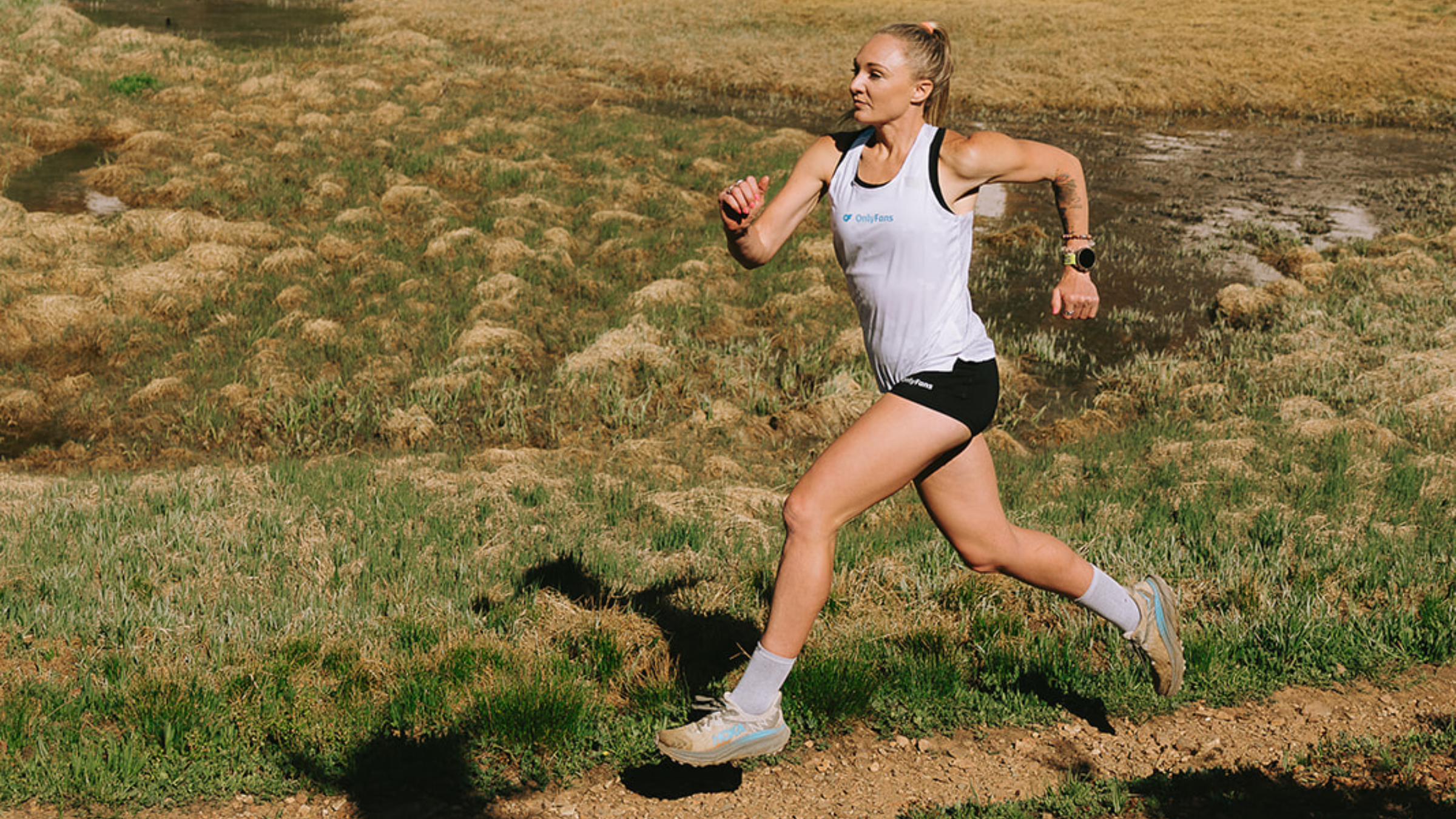
A New Kind of Deal
Stanley had quietly considered joining OnlyFans for some time but held off until her shoe sponsor contract finished at the end of 2024. She and Clements revisited the idea—this time as a full-fledged sponsorship, not just a content platform.
She approached the decision thoughtfully. “I talked to my mom and my partner at the time … just really went through all the different avenues of what it would mean going to the start line in a uniform that’s OnlyFans.”
ADVERTISEMENT
The structure of the contract, she said, mirrors a traditional running sponsorship deal without the exclusivity restrictions. Then, she says, the power is hers in terms of how she uses the platform.
“I could do zero paid content and treat [OnlyFans] like a true Instagram account, or I can do paid content and, like any other creator on the space, make that money outside of my contract.”
Stanley posts workouts, race updates, personal reflections, and yes, some nude photos. For her, she said it’s a parallel to her feminist values. “There’s this culture of purity, and I refuse to buy into it, that I’m less of a human or less respectful because I want to show some skin. I know I’m intelligent and I am still a good person, and I deserve all the best things. And I also want to be topless.”
There’s this culture of purity, and I refuse to buy into it, that I’m less of a human or less respectful because I want to show some skin. I know I’m intelligent and I am still a good person, and I deserve all the best things. And I also want to be topless.
Breaking Free From the Norm
Stanley’s partnership with OnlyFans also gives her the flexibility to fully customize her training and race gear, which may seem small but can make a huge difference in performance. “I’m probably cycling through three or four, maybe even five different shoe brands right now, depending on what my body wants that day, and I love that flexibility.”
ADVERTISEMENT
Without the rigid agreements in traditional contracts, athletes are experimenting with direct-to-fan monetization—hosting events, selling merchandise, or creating subscriber-based content. “Platforms like Patreon or OnlyFans foster more engaged, loyal audiences,” Clements says. “Paid subscribers are essentially superfans. They’re more likely to try products the athlete genuinely uses and endorses.”
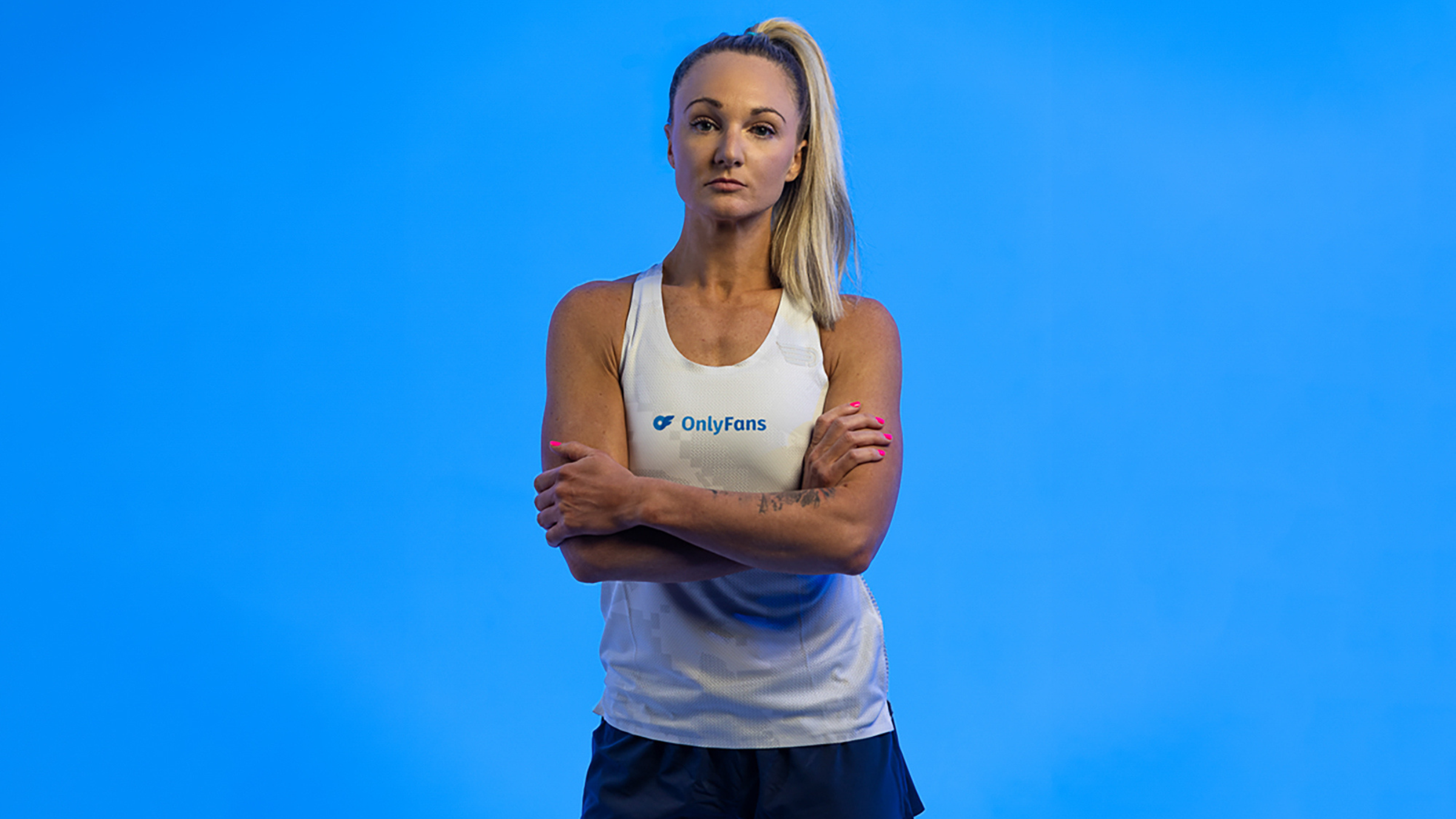
Patreon is another example of direct-to-fan monetization as it allows content creators to earn recurring income directly from fans who subscribe for exclusive content, behind-the-scenes access, or personal interaction. These platforms allow athletes and creators to bypass traditional sponsors and gatekeepers to build their own communities (and revenue streams) on their own terms.
Within the running community, the coaching duo of David and Megan Roche, co-hosts of the “Some Work, All Play” (SWAP) podcast, is an example of personalities who use Patreon. Fans pay for bonus episodes, training advice, Q&As, and behind-the-scenes content—not advertisements. The intended result is a consistent income stream and a direct line to their most supportive audience.
While the platforms and formats vary, athletes are hoping for three things: creative freedom, financial autonomy, and a stronger connection to the people who care most about the athlete’s journey.
ADVERTISEMENT
Beyond Brands
In June 2025, middle-distance star and 2016 Olympian Colleen Quigley announced the launch of Meridia, a new athlete-owned pro women’s running team. Quigley says Meridia is designed to flip the traditional team sponsorship model on its head. Instead of being owned by a single shoe brand or forced into top-down coaching structures, Meridia’s goal is to be governed by the athletes themselves, who choose their own coaches and help shape brand partnerships.
“It’s so important that we get to choose the culture,” Quigley explains. “We don’t want a situation where a coach just says, ‘Here’s your new teammate,’ and we’re stuck with someone we don’t vibe with.” Meridia has turned the traditional model on its head – where a brand backs a coach who picks the athletes – by building the team from the athletes up. “We’re the ones making all the decisions,” she adds, “even when it comes to which brands we partner with.”
ADVERTISEMENT
Meridia says it wants to reimagine what a professional women’s running team can be, both as a performance collective and as a brand platform. Crucially, the team is positioning itself as a vehicle for non-endemic sponsors, allowing broader commercial partnerships that don’t conflict with existing individual deals and that leverage the power of a unified, visible group.
Strategically, it’s a smart bet: pooling collective reach to attract brands that might otherwise overlook running. But the big question remains: Can Quigley and her collaborators deliver—both competitively and commercially—at a high enough level to convince those brands to come on board and stay? Quigley believes the timing is finally right with the rise of women’s sports, more sophisticated athlete storytelling, and the countdown to the 2028 Olympic Games in Los Angeles already underway.
“We just kept asking, ‘What do we actually want this to look like?’” Quigley says. “And even more importantly—what don’t we want? We don’t want to be told where to live, who to train with, or what gear to wear. We wanted the flexibility to make those choices ourselves.”
ADVERTISEMENT
Quigley has seen firsthand how legacy models work during her time with the Nike-sponsored, Bowerman Track Club (BTC). “We had built this brand, the Bowerman Babes… but Nike owned that,” Quigley explains, “so if you wanted to become part of the Bowerman Babes, you had to get a contract with Nike in order to join our team.” According to Quigley, some BTC athletes made zero dollars from Nike, receiving only gear, but they took the deal because they wanted to be on the team and work with the coach.
With Meridia, Quigley says she aims to rewrite that power dynamic. And her vision is this: build an athlete-centered infrastructure from scratch. Rather than being beholden to one brand’s budget, Quigley and her team raise funds across multiple partners, define their own structure, and create training and travel conditions that work for the athletes.
Unexpected Support
Sadly, Stanley’s story took an unexpected turn this year with a cancer diagnosis. After multiple surgeries, including the removal of her uterus, cervix, ovaries, and lymph nodes, she also began preventive chemotherapy on Aug. 1.
While her goal race of UTMB is now off the table for the year, she remains hopeful about returning to competition. “Just the idea of getting back to running, even lightly, gives me a glimmer of hope,” she says. Depending on how her body responds to treatment, she’s eyeing a possible late fall return.
Despite not racing this season, Stanley says OnlyFans has remained fully supportive of her career and her health. “They’ve been incredible,” she says. “I just feel like I’m not doing enough on my end because I’m not racing, but that’s my own internal pressure. Tyler’s been keeping them in the loop, and they’ve had my back the whole way.”
