Updated February 10, 2026 05:17AM
How World-Class Running Created an Unlikely Winter Olympian
Six months ago, professional trail runner Anna Gibson added ski mountaineering to her repertoire. Now she's headed to the 2026 Winter Games for Team USA.
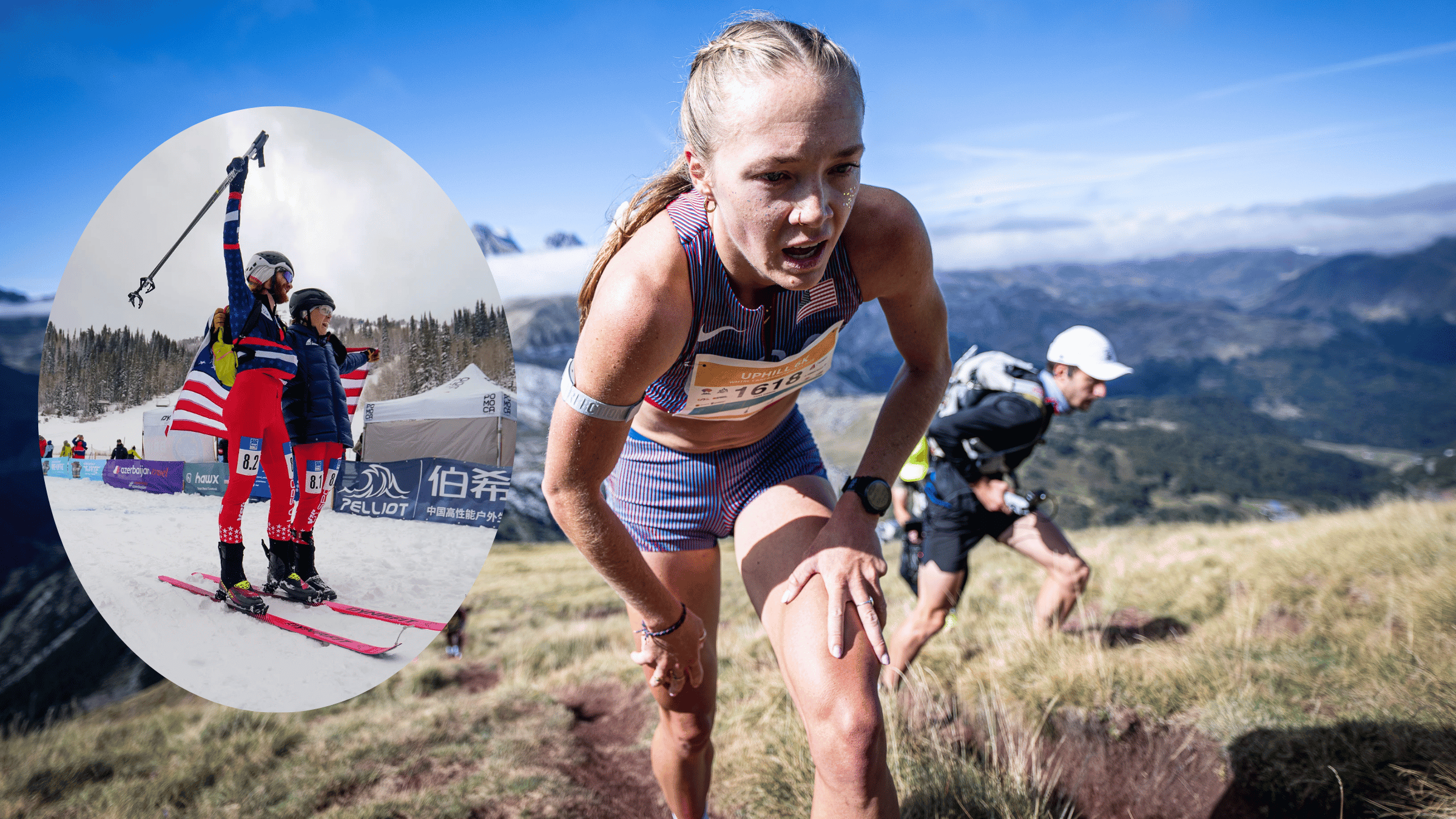
(Photo: Courtesy WMRA, Team USA)
Even with an Olympic berth on the line, Anna Gibson says she wasn’t under pressure.
On December 6, 2025, Gibson competed alongside mixed relay partner Cam Smith in the International Ski Mountaineering Federation (ISMF) World Cup season opener. Their mission: Beat Canada to secure Team USA’s spot at the 2026 Winter Olympic Games, where ski mountaineering (aka “skimo”) will officially make its Olympic debut.
The kicker? This was her first-ever skimo race.
A professional trail runner, Gibson, 26, decided to try skimo just six months earlier. It was around then, in June, that she dominated the USATF Mountain Running Championships and competed in her second-ever cycling race, placing third at the 69-mile gravel Crusher in the Tushar event.
“I kind of have this foundation of just following curiosities within the endurance sport world,” she says.
ADVERTISEMENT
At the world cup, Gibson saw only potential wins. “I somehow was just able to dissociate from this potential negative outcome,” she recalls. She told herself: Even if she and Smith failed to outplace Canada’s team, she still tried a new sport. She nearly made it to the Olympics. And she’d have the chance to try again in four years.
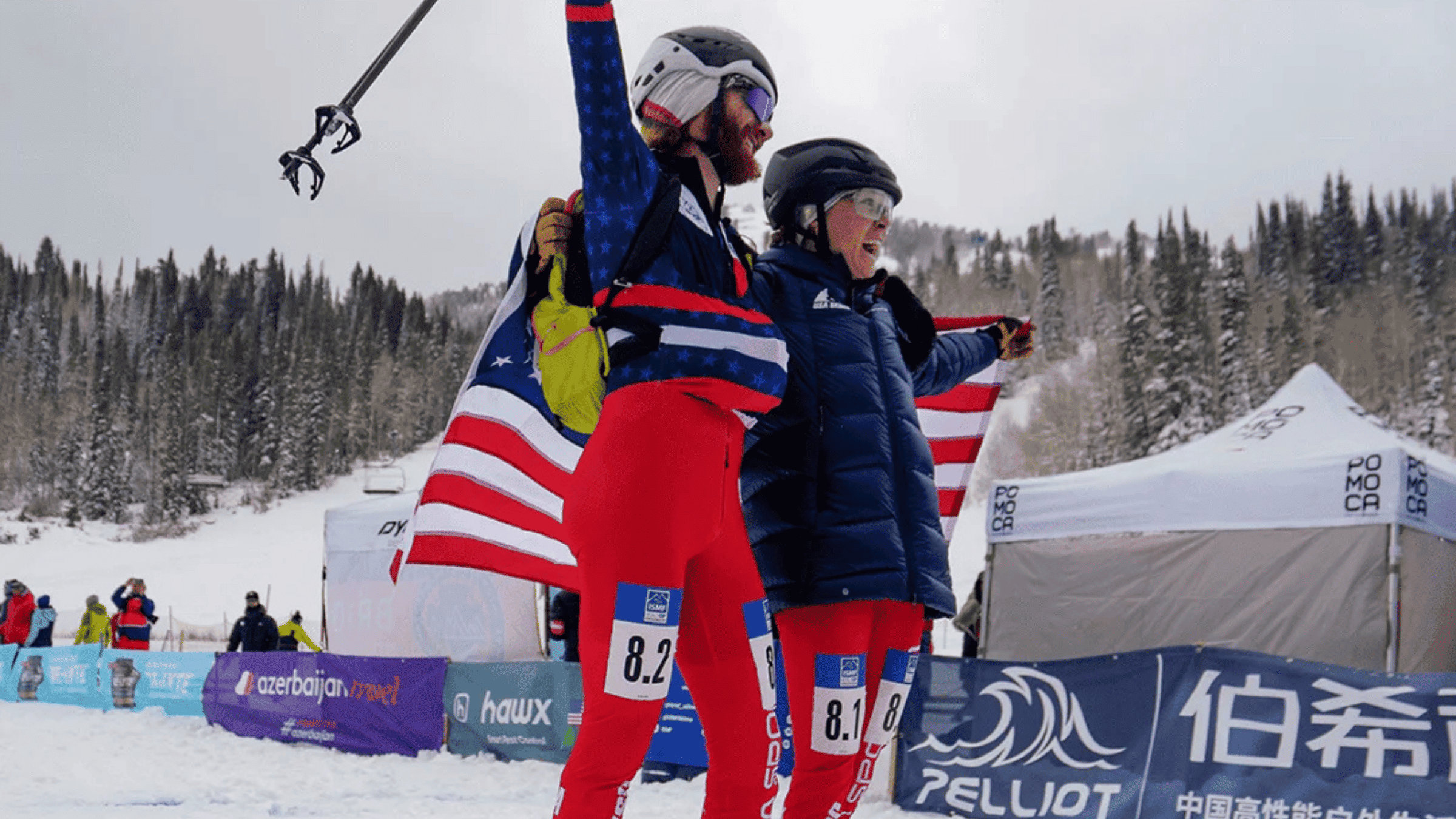
But she wouldn’t have to wait. After 32 minutes and 17.6 seconds of climbing up and skiing down the Utah ski resort, Gibson and Smith not only surpassed Canada, they won the whole race.
They’re the first American team to ever win a mixed relay world cup event. Now, they’ll compete on the Olympic stage in Bormio, Italy on February 19 (in the men’s and women’s individual sprint) and 21 (in the mixed relay).
A Multisport Talent
While brand-new to the competitive side of skimo, Gibson has been skiing in various forms for nearly her whole life. She grew up on the outskirts of Jackson, Wyoming, where she Nordic skied and downhill ski raced at Jackson Hole. (She also did some early morning uphill laps on a backcountry setup in the mornings before the resort opened).
ADVERTISEMENT
And she excelled from a young age at running, becoming a 17-time high school state champ across cross country, track, and Nordic skiing before running NCAA Division I at the University of Washington. Out of college, Gibson forged her own path by signing with Brooks to run on the trails and the track. In 2024, she made the 1500-meter semifinal at the U.S. Olympic trials for track and field—less than a week after winning the Broken Arrow vertical kilometer race up Palisades Tahoe in California.
That multi-sport talent, plus her positive and professional attitude, is what made Gibson an appealing addition to the U.S. skimo team, says 13-time national skimo champ and fellow trail runner Smith, who extended the invite to try out.
“I had no idea how the racing would work out and how well she would do and what we would accomplish together, but it’s like I knew if she was around, she would make the team better,” he says.
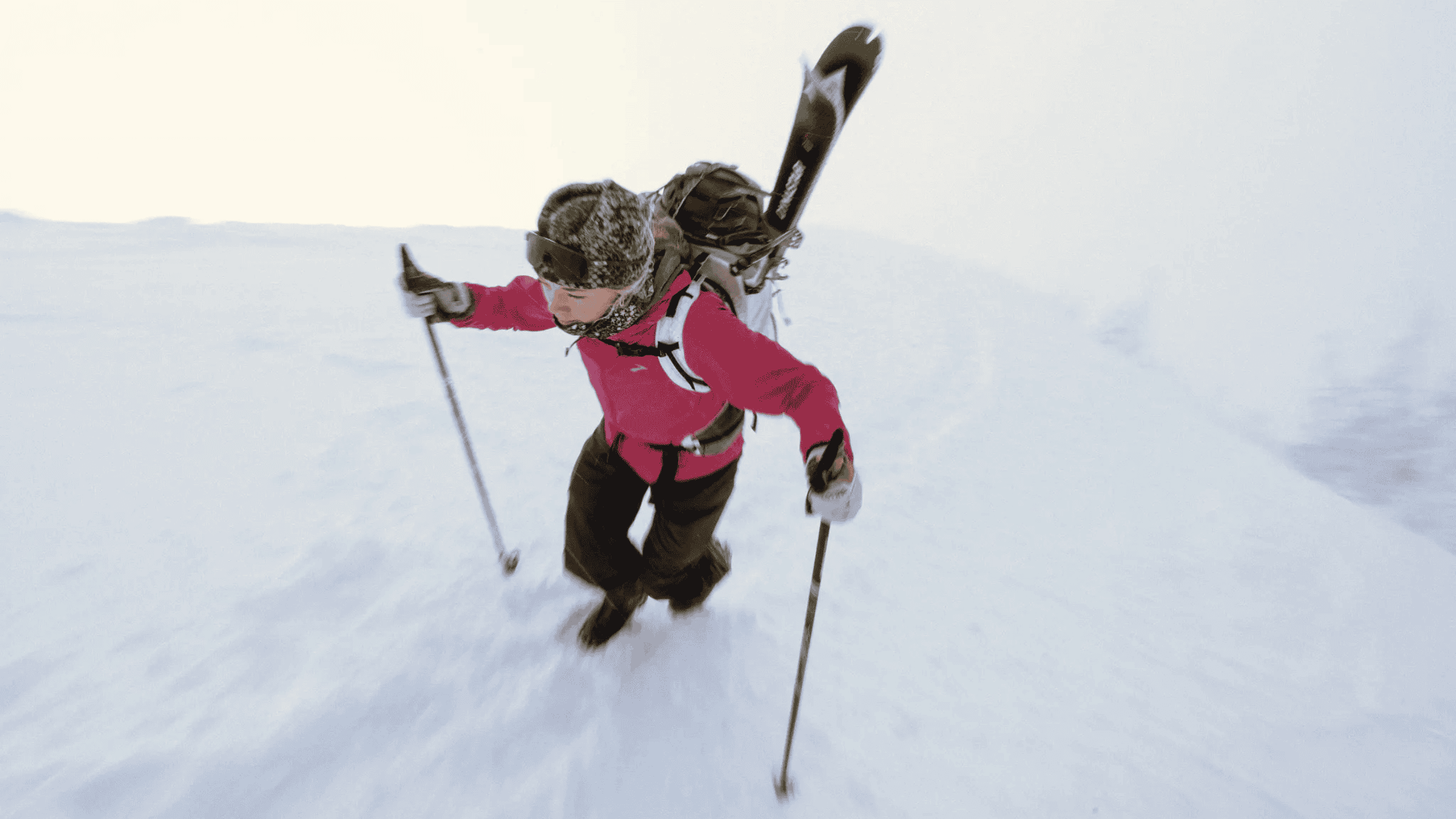
In a skimo mixed relay race, one teammate completes a series of technical ascents (sometimes climbing, also known as “skinning,” with grippy skins on the bottom of their skis, other times boot-packing, skis strapped to their backs) and ski descents, then tags their partner at the end of the lap. Each athlete completes the course twice; the first to cross the finish line wins. It’s a high-octane business with no room for error—one lap might take fewer than nine minutes.
Skimo taps into Gibson’s core strengths, namely VO2 max sufferfests. Her training for trail running, especially the uphills, gives her a strong aerobic base that fends off fatigue, and her track background gives her an explosive edge. (The Olympic version of skimo is a sprint sport, after all.) During the trail running season, Gibson says she incorporates hill strides and shorter interval workouts into her training. Her years spent downhill ski racing as a kid meant she already had a solid foundation for the descents.
ADVERTISEMENT
“It hasn’t been a massive transition, honestly,” Gibson says. “I’ve done a bit more intensity than I would normally be doing this time of year, but it hasn’t been, like, a new style of training.”
It’s rare for an athlete to be able to pick up a new sport and build the necessary skillset so quickly, Smith believes. But it’s also not surprising that Gibson is such a sponge. “It’s just kind of who she is,” he says. “She’s just an elite athlete, and that’s what elite athletes do.”
Slowing Down to Speed Up
The competitive side of ski mountaineering takes many forms, from the classic overnight vision quests like The Grand Traverse in Colorado and multi-day, rugged stage races like the Pierra Menta in France to the short, very fast, made-for-TV side of the sport debuting at the 2026 Games. At these Olympics, each lap of the mixed relay ascends about 500 vertical feet for roughly a 9-minute lap. The individual sprint event, which is hosted in a seeded bracket format with multiple rounds, has just 262 vertical feet and lasts about 3 minutes.
In these Olympic races, which are often decided by fractions of seconds, the transitions are paramount: Skiers must switch from uphill “skinning” mode to downhill mode by ripping the skins off their skis and locking their boots in place. Once they reach the bottom of the mountain, they must reattach the skins to their skis and place their boots in “uphill” walking mode to go back up again. There’s also the transition from skinning to boot-packing, when skiers take their skis off their feet and secure them to their backs so they can march up the steepest, most technical parts of the mountain on foot. It’s all done in seconds.
ADVERTISEMENT
This is the part that Gibson has found tricky.
“[Gibson] obviously has this amazing aerobic engine and strength and power, and the transitions are kind of that in-between part,” Smith says. “And she’d been using this gear all her life, but not really doing the transitions in like a skimo style and at a skimo pace, so she was kind of learning that.”
While in the throes of trail running season, Gibson says she spent 30 to 45 minutes a couple of times a week drilling those transitions into muscle memory. “I think it’s hard to overstate how important the transitions are in the mixed relay discipline,” she says. But finding calm in the chaos has made the biggest difference in her performance. While in the transition box, coaches and officials are watching for rule infractions. Other athletes are elbowing or kicking by accident. There’s screaming.
ADVERTISEMENT
“I found that for me, the transitions just go so much better when I’m not trying to be fast,” she says. “They were actually faster when I stopped trying to be fast, which is a very contradictory realization.”
Juggling so many sports at once may seem like a compromise on all fronts. But Gibson says joining the skimo team was key to the success she had this past trail running season. Just one week before competing in the World Mountain and Trail Running World Championships—which she calls “objectively the most important event I’ve ever competed in”—Gibson jetted off to Italy with the U.S. skimo team for a training camp. They skied the Stelvio Glacier and trained on dry land in the Dolomites.
ADVERTISEMENT
“I think that could have been seen as, like, a very risky decision,” Gibson says, “but honestly, I got there and there was this moment that I was running in the mountains with Cam [Smith], and we both were just like, ‘Wow, this is the whole point. Even if we don’t make the Olympics and none of this matters in the end, like, we are so happy to be here.’ Just to feel so, like, loose and free and excited about training and just having a great time in Italy was the best preparation that I could have had mentally for trail worlds.”
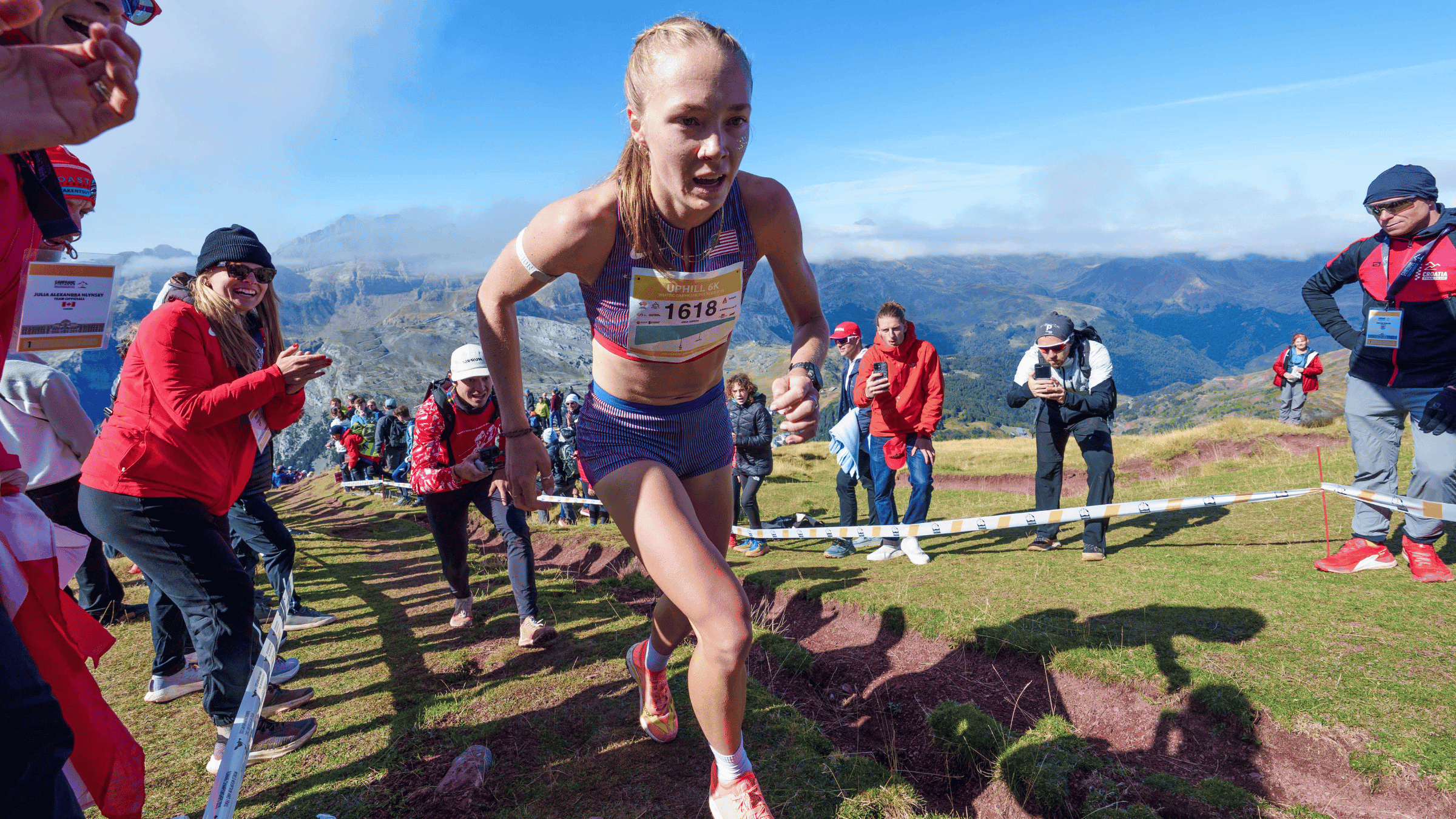
She ended up clinching the bronze medal in the women’s uphill 6-kilometer event, which climbed nearly 3,250 feet through the Pyrenees. (Smith agrees: “That [moment] really made me realize that she, like I said, is just the kind of person you want around when you’re in these stressful situations.”)
There’s not much to stress about before the Olympics, where both Gibson and Smith will compete in the individual sprint races in addition to the mixed relay. Their fitness is locked in: “That’s something we’ve both been working on our whole lives, and nothing is going to change a lot in the next few weeks,” Smith says. They’ll spend the quiet time between the opening ceremony and their races sharpening those transitions and doing some downhill ski-specific training.
Gibson is also ready to find the silver lining, just like she did at the world cup.
ADVERTISEMENT
“I’ve just learned a lot from that [event], like thinking about how I’m going to apply that exact skill to other races,” she says. “When it does feel really intense or it does feel like there’s a lot of expectation or pressure on me, how do I just zoom out and look at the big picture? No one actually really cares if you fail, because there’s always another opportunity to try again. People only take note if you succeed.”
