Updated March 3, 2026 02:02PM
Yes, You Can Qualify for Boston Running and Walking
It doesn’t seem possible, but the late Jeff Galloway’s run/walk method has produced thousands of Boston qualifying times. But it takes diligence.
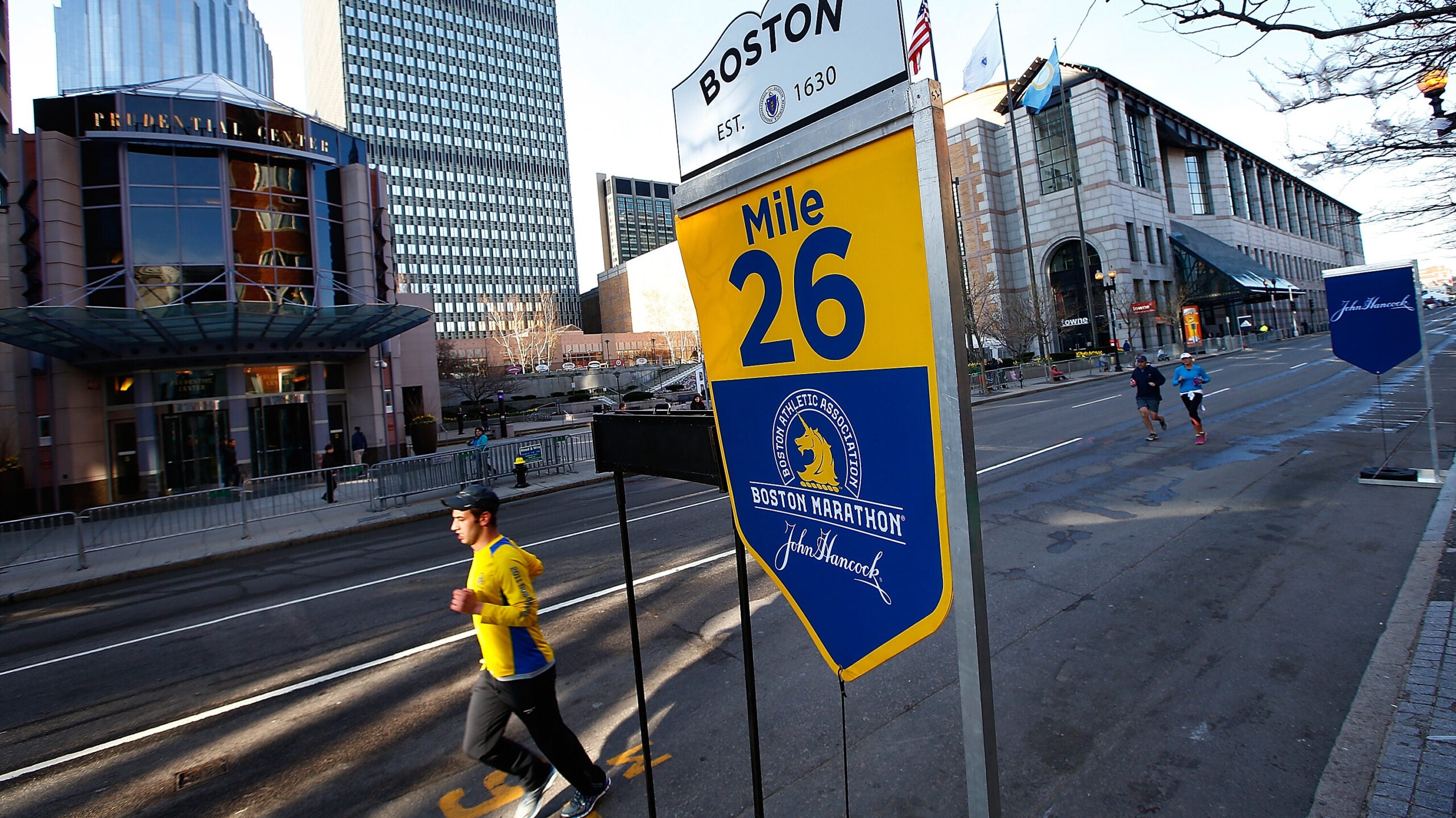
Marc Burget has used the run/walk method both to qualify for the Boston Marathon and run it. He shares his experience. (Photo: Getty Images)
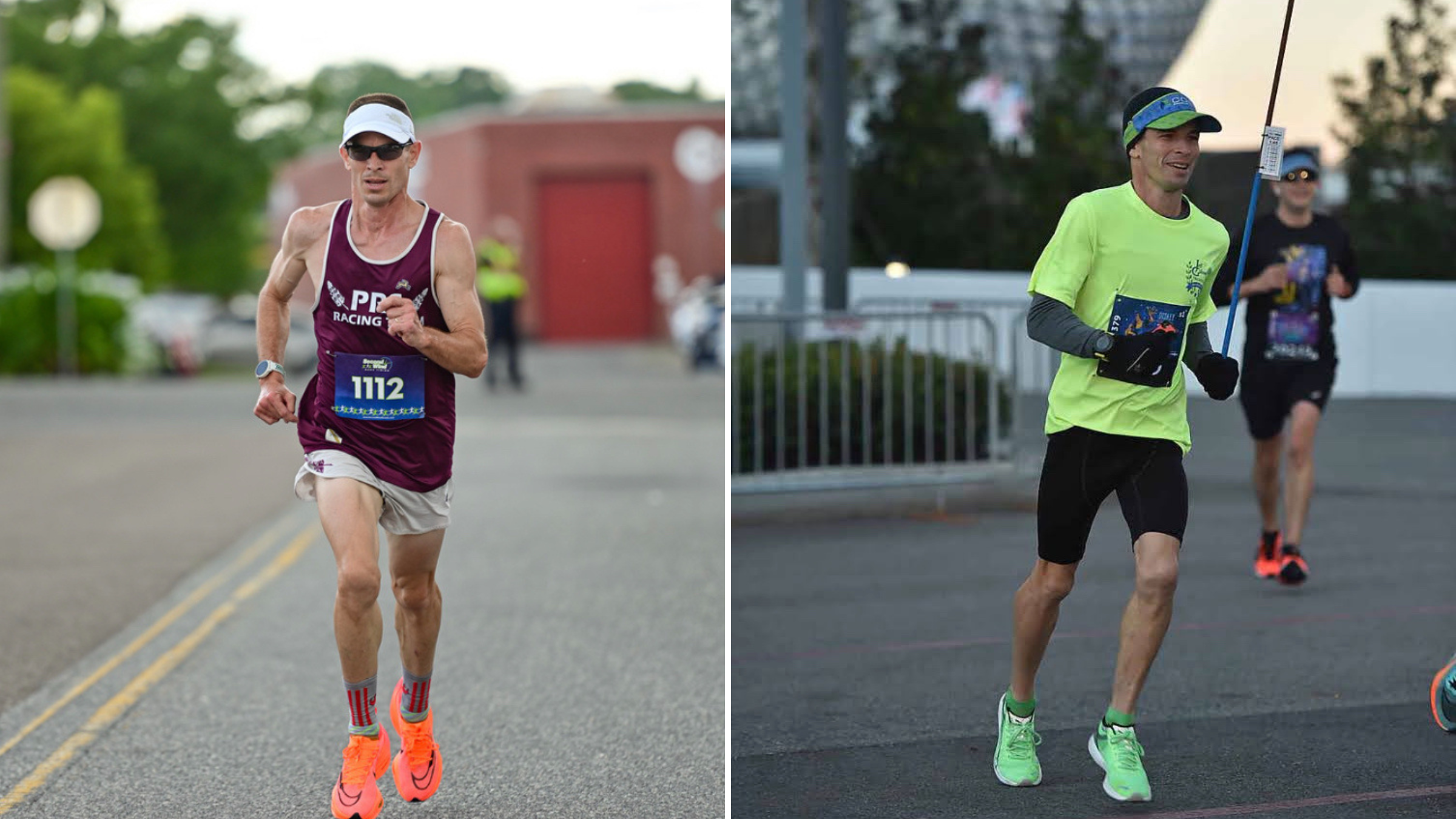
It was 10 miles into the DONNA National Marathon in Jacksonville, Florida, and 52-year-old Marc Burget had already stopped and started running 10 times.
It might sound like he was having a rough day, but actually Burget was on track to come in well below his age group Boston Qualifier time of 3:15. Still, as anyone who’s done a marathon knows, there was lots of running to go.
But Burget followed his plan of running for 0.6 miles, followed by a 15-second walk. Those run portions were very speedy—he usually clocked about a 6:15/mile pace.
It might sound like hell to some runners, but Burget is a run/walk evangelist, and his results prove something no one would expect: It’s possible to run a BQ with walk breaks. He’s qualified for Boston with this method many times; his fastest qualifying mark is a 2:42 marathon. And he’s among potentially thousands of runners who’ve done it, according to data from one of the method’s greatest evangelists.
ADVERTISEMENT
Adherents say there are many benefits to the run/walk method—it’s easier on the body, makes recovery quicker, conserves energy and adds a brain break to long runs.
Mentally, Burget likes the rhythm of taking walk breaks.
“It just doesn’t feel as monotonous,” he said. “I take it one mile at a time and just run to the next walk break. It really eases my mind in a marathon, or even in a 100-mile race. I don’t think about the distance. I just think about getting to that next walk break each mile.”
He also says he doesn’t worry about the end of each walk break when he has to run again.
“If I know I’ll have another walk break the next mile, I’m fine,” he said. “It’s part of the rhythm. The only time I dread it is when I know I’m throwing it out completely and going straight to the finish.”
ADVERTISEMENT
Physically, the hardest part comes at the end, just like for any marathoner. Burget’s plan is always to run the last 6.2 miles straight, with no walking, so he doesn’t have the bodily pain of starting and stopping again. But he says he dreads losing his walk breaks.
“Sometimes I say I’ll throw out the walk break at 15 miles, but I enjoy it so much that I hang onto it for 5 more miles,” he said. “I dread it because I won’t have that break to look forward to each mile. I know it’s going to be 6 straight miles as fast as I can go.”
Some runners might contend that Burget could be faster without the walk breaks, but he doesn’t see it that way. His marathon PR is 2:35, which he ran without walking, but that was also 10 years ago. Now that he’s in his 50s, he knows his PR days are behind him and says the breaks give him more energy at the end.
And that means he doesn’t mind the funny looks he might get from other runners during a race. Because at the end, they’re usually impressed.
ADVERTISEMENT
“During the race, we leapfrog each other, I run past them, then when I walk, they pass me,” he said. “But later in the race, the gap gets bigger and I see them falling farther back.”
Run/Walk Works for Hundreds of Runners
Burget is one of thousands of runners who are believers in the run/walk method, and for many of those runners, the late Jeff Galloway is their guru. Galloway ran the 10K in the 1972 Olympics and continued to have a successful masters running and coaching career before passing away in February 2026. He was also the creator of the “Galloway Method,” a combination of running and walking that gets people off the couch and onto running trails.
But, Galloway contended, the method can also be used for faster race times.
“We’ve done surveys on this in our training groups and found that those who used to run nonstop for marathons, when they find the right run-walk-run, the average improvement over running nonstop is a little more than 15 minutes,” Galloway said, shortly before his passing.
ADVERTISEMENT
And Galloway noted that every year he has had 50 to 100 of his runners qualify for Boston using the run/walk method, who said they could not qualify if they were running nonstop.
Galloway was also a practitioner, of course. He ran a PR of 2:16:35 at the Houston Marathon in 1980 while walking 15 to 20 seconds every 2 miles. Of course, when he was running, he clocked a little over a 5-minute pace.
But, even for those who aren’t hoping for Olympic-level marathon times, Galloway said the method is helpful.
“I’ve heard of several others running under 2:30 using the method, though only a handful,” he said. “There have been many in the 2:30 to 2:40 range, and hundreds under three hours who couldn’t break three running nonstop.”
ADVERTISEMENT
Why It Works
The reasons run/walk works, he said, have to do with science and anthropology.
“Our ancient ancestors probably didn’t do regular long-distance running; they regularly starved, so they weren’t going to use limited food resources by running,” he said. “They walked everywhere. So we inherited incredible endurance through walking.”
ADVERTISEMENT
The method conserves energy, resets fatigue early, and reduces stress on the body, all of which prevent the classic late-race slowdown.
“Walk breaks from the beginning reset fatigue so you don’t get exhausted by the end,” Galloway said. “If you run nonstop for 10K, you’ve accumulated 6 miles of fatigue. With the right run-walk-run ratio, you may only accumulate 3 or 4 miles’ worth of fatigue by that point. That translates into more strength at the end.”
Plus, it means you can do longer training runs.
“Many of our runners build endurance with long runs up to 26 miles or more,” he said. “That, by the way, gives about a 13-minute time advantage over stopping at 20 miles in training.”
ADVERTISEMENT
How to Do It
The key is balance, Galloway said. You don’t want to walk for too long.
“We did a research project to see what amount of walking produces faster times,” he said. “We found that when people walk more than 30 seconds on their walk break during the second half of a marathon, they tend to slow down more. It becomes harder to restart after a walk break.”
ADVERTISEMENT
For example, he found that if runners at a 9-minute pace did two minutes running and 30 seconds walking doubled their ratio to four minutes running and one minute walking, their times were actually slower by about two to four minutes, despite the fact that they were running and walking the same amount.
So Galloway noted that finding the right ratio is key. He had a database of 500,000 runners who used his method, so he could use that data to help find the right balance. Below we’ve broken out some of the major milestones:
| Pace | Most Successful Run/Walk Ratio |
| 8-minute miles | Run 4 minutes and walk 30 seconds |
| 9-minute miles | Run 3 minutes and walk 30 seconds |
| 10-minute miles | Run 90 seconds, walk 30 seconds |
| 11-12-minute miles | Run 60 seconds, walk 30 seconds |
| 13-14-minute miles | Run 30 seconds, walk 30 seconds, or 20/20 or 15/15—equal amounts |
| 15-minute miles | Run 15 seconds and walk 30 seconds |
“The bottom line is everybody does it differently,” Galloway said. “So I can’t tell you exactly how much faster someone has to run during the run segment to maintain the overall pace. It varies by individual and during the race itself. Nobody runs exactly the same pace the whole way through.”
Galloway also said the trick was to have an audio timer to keep track of when to run and when to walk.
“Because otherwise you’ll drive yourself crazy looking at your watch,” he said.
Galloway created a Run-Walk-Run app with a free timer, but says you can use any small timer that beeps or vibrates.
He advised against using your phone as a timer during a race, if you are also using other apps during a marathon as you might run out your phone’s battery.
Also, if you’re using a Garmin or another GPS watch, make sure it’s set to average pace, not current pace, so you can stay on track over the course of the race.
The best part, Galloway and other practitioners say, is passing people at the end.
ADVERTISEMENT
“There’s nothing more exhilarating,” Galloway said. “Those who take walk breaks early are often the ones passing people late.”