Updated July 10, 2025 02:17PM
Inside the Kilian Jornet Playbook For Western States
After 14 years, Jornet is returning to America’s most iconic ultra. We sat down with the trail running GOAT to nerd out on his build up.
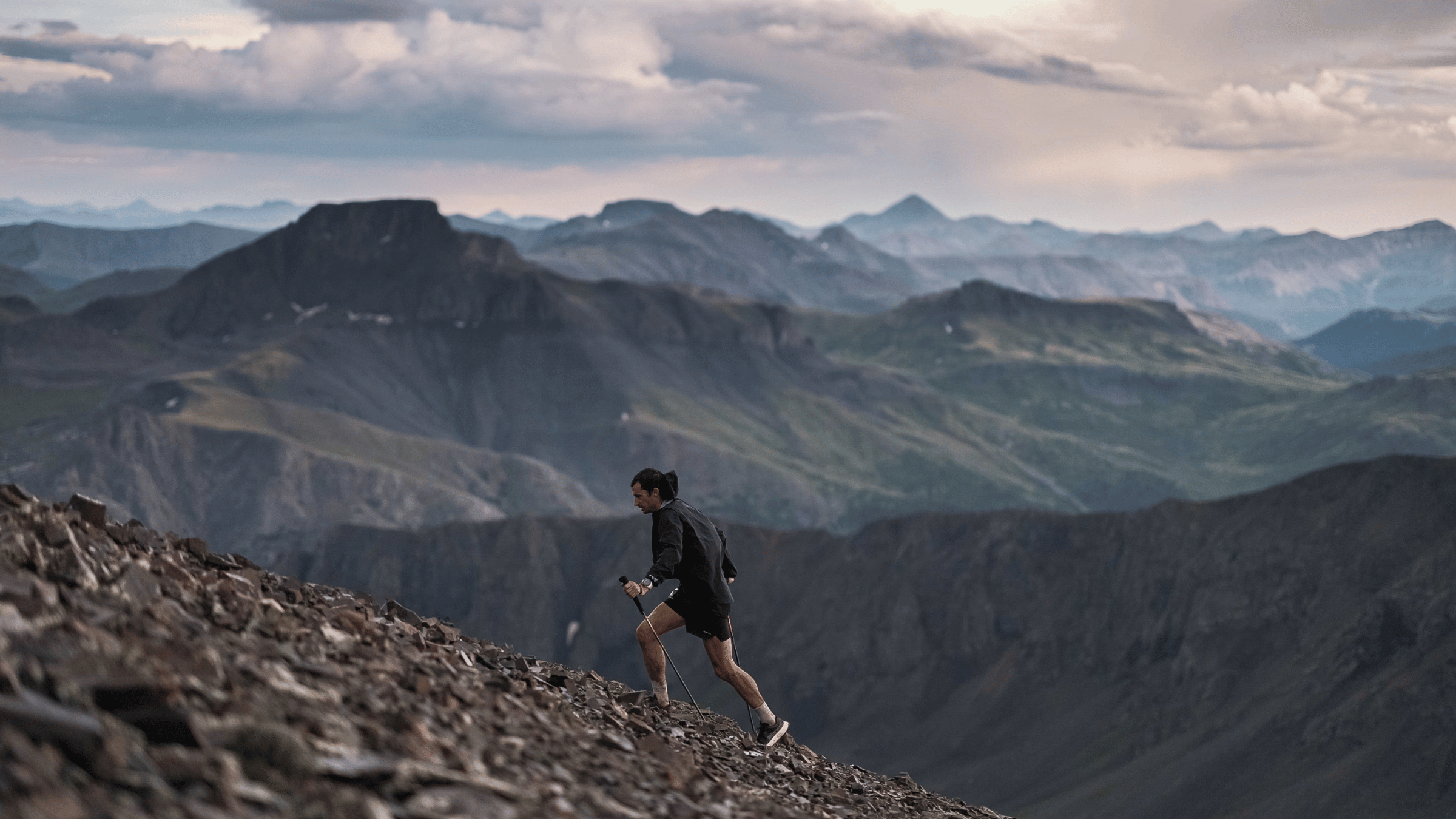
(Photo: Nick Danielson)
In 2024, Kilian Jornet won Zegama for the 11th time, Sierre-Zinal for the 10th time (in a course record), and completed “his hardest project ever” by summiting all 82 4,000-meter peaks in the Alps in 19 days. But it was what he did next that truly shocked the running world: announcing his intent to return to the 2025 Western States 100.
Widely regarded as the greatest mountain runner of all time, Jornet has a list of accolades longer than most Costco receipts. He’s at his best on technical and steep terrain and in cold and temperamental weather. Western States, of course, is none of those things. This makes his return to the flame-broiled canyons and dusty fire roads of the Sierra Nevada all the more interesting.
After placing third at his Western debut in 2010 and winning the following year, Jornet has essentially stuck to mountain trail races like Ultra-Trail du Mont-Blanc and the Hardrock 100—winning them a combined nine times. Along with Courtney Dauwalter, he’s the only person to have won this 100-mile “triple crown.”
Throw in numerous speed records, including on Denali, Mont Blanc, and the Matterhorn, and he has nothing left to prove. This might make you wonder: What motivated a 37-year-old father of three living in cold, mountainous Norway (not exactly prime Western States training conditions) to come back?
ADVERTISEMENT
“The challenge,” Jornet tells Outside Run. With one of the most stacked fields ever, Jornet was lured in by the level of competition and a sense of curiosity, wondering what his competitors could bring out of him.
We sat down with Jornet as he put the finishing touches on his training block to learn about his build and his outlook going into the 2025 Western States.
Watch: Kilian Jornet’s 2017 Everest speed record.
ADVERTISEMENT
Why Kilian Jornet is Returning to Western States
As a parent with three young kids (his partner Emelie gave birth to their third daughter in March), Jornet travels much less than he used to. These days, most of his races are near his home in Romsdal, Norway, with two or three international trips each year, a far cry from the 50-plus races he ran annually at the start of his career. While the hot-and-“flat” terrain of States isn’t his strength, Jornet was motivated by the challenge of it.
“I’m at the point in my career that I don’t have anything on the bucket list,” Jornet says. “I go to races where I can enjoy the process of training and try to learn something. So it was a good excuse to say, ‘OK, I know it’s very competitive so I will have the motivation to try hard and train differently.’”
The Build Up
Coming into the season, Jornet had a big aerobic base from ski mountaineering throughout the winter, along with some running and indoor cycling. (He maxed out at 25.5 hours in the third week of January.) Twelve weeks before States he started to get specific with his training, focusing on heat. (In addition to 100-plus-degree F temperatures in the canyons being the crux of the course, Jornet doesn’t sweat much, which puts him at a disadvantage in warmer temps.)
ADVERTISEMENT
He started doing every other workout in the heat, starting with one-hour sessions and building up to three-hours in 105 degrees F. At the same time, Jornet also needed to train his legs for the fast course.
“I needed to get the right neuromuscular stimuli,” Jornet says. “My first five-week block started with three-hour runs, either rolling terrain or some uphill threshold and then flat, at race pace or just a little faster. I can feel the difference from my first sessions to now, where the speed feels much easier.”
Heat Training in the Cold
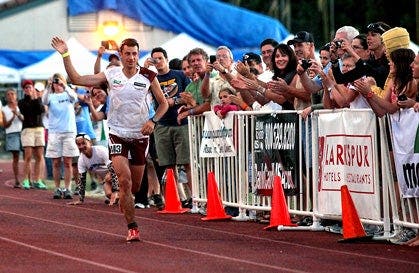
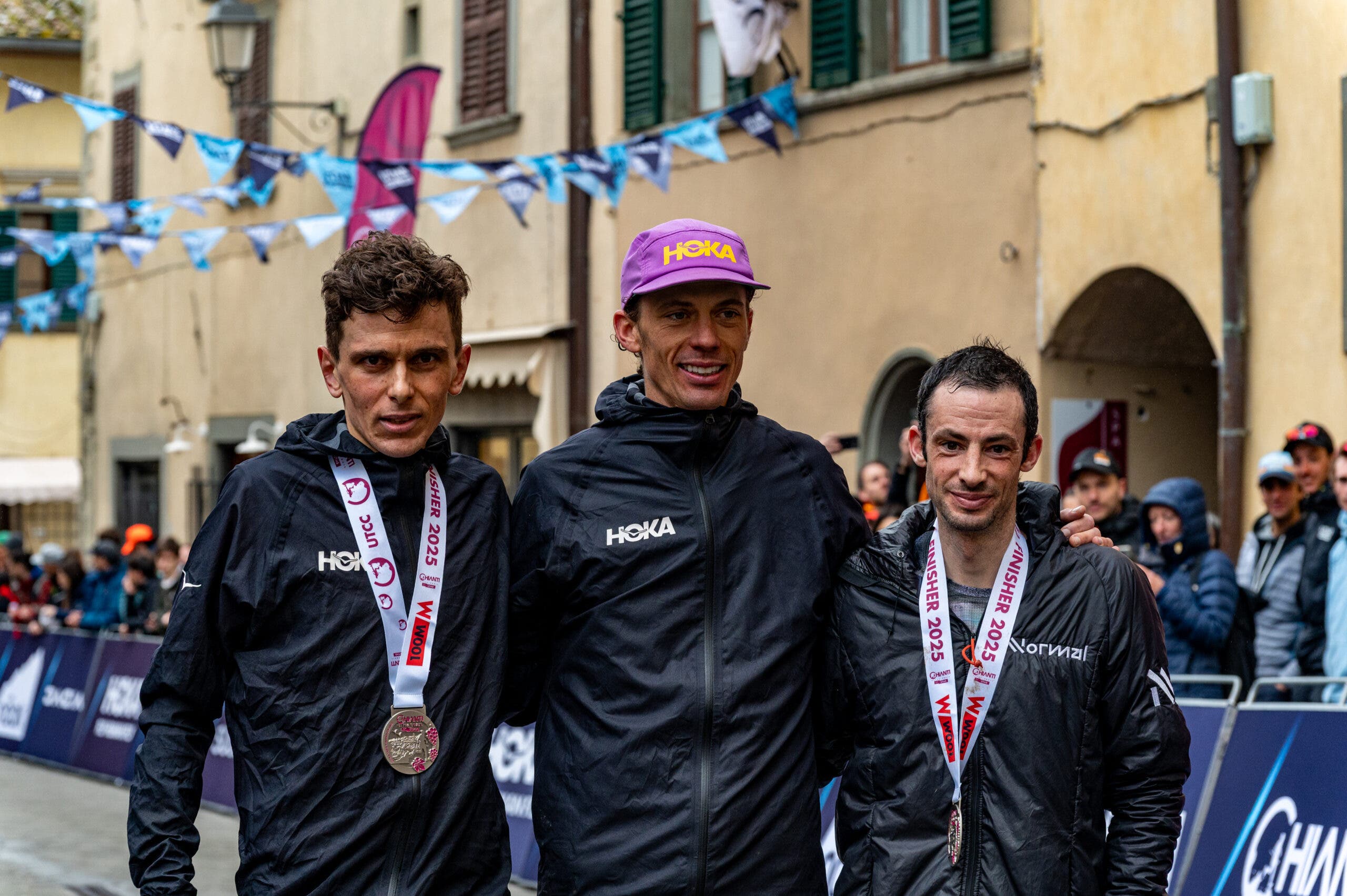
After qualifying for States with his second-place finish at the Chianti 100K, a Golden Ticket race in March, he leveled up the duration and frequency of these sessions, preparing his body for the oven-like experience of the race.
ADVERTISEMENT
“I’m doing heat sessions three-to-four times a week now, usually two or three hours each,” Jornet says. “In the past I could get my core to 102 degrees Fahrenheit and still not sweat, but now I am losing two-and-a-half liters of water in a two-hour session. I’ve also been tracking the sodium loss and increase in plasma volume, which helps with circulation and cooling.”
Key Workouts
A month before he toes the start line in Olympic Valley, Jornet ran a 50-mile workout to simulate the end of the race. After dropping off his two older girls at kindergarten, he had six-and-a-half hours before needing to pick them up. So he threw on his shoes (a pair of Nnormal Kjerag, if you were wondering) and immediately got out the door.
The day before, he had done a heat session—an hour on the treadmill in his hot box home gym—and (intentionally) didn’t rehydrate much after. That way he would begin his six-hour run in a dehydrated state, replicating how his body might feel on the back half of the notoriously hot-and-sunny hundred-miler.
ADVERTISEMENT
“I was about one kilo less when I started and didn’t drink for the first two hours, to push my dehydration,” Jornet says. “That made it feel more on the system and kidneys. The good thing is that my legs were okay the day after that workout, which shows the adaptations are working. The goal is to do a few more sessions like this with more systemic stimuli, before starting to taper.”
He ran 49.7 miles with nearly 8,000 feet of climbing in under six hours and 15 minutes.
Ten days later, Jornet set a personal best on Nesaksla, his local test piece. He covered the 1.2-mile, technical climb with 2,247 feet of climbing in 19 minutes and 19 seconds.
“The biological inertia of training stimuli is way more important than specific workouts,” he wrote on Strava regarding the effort.
ADVERTISEMENT
Keeping It Simple
Jornet finished that 50-mile run with 10 minutes to spare before picking up the girls at kindergarten. Then was in parent mode for the rest of the night. He didn’t have time for any of the traditional recovery tools or techniques like ice baths, foam rollers, or compression boots. Instead, he kept it simple.
The things that really work for recovery are the cheapest, but also the most difficult to achieve.
“The things that really work for recovery are the cheapest, but also the most difficult to achieve,” Jornet says. “This starts with sleep, like good sleep. It’s nutrition and eating well, stress and load management in training. You need to know when you’re training so much you can’t recover. You need good food that doesn’t cause inflammation, less processed and less chemicals. And all the fancy tools, forget them.”
To-Go Metrics
Most days, Jornet will focus on perceived effort over any set metrics. After two decades of training around 1,000 hours per year, he intuitively knows when he can push and when he needs to back off. The exception is during threshold workouts, when he’ll monitor his heart rate to make sure it’s in the right zone. Instead of meticulously tracking data during runs, he does most of his assessment afterwards.
ADVERTISEMENT
“After workouts I check the osmolality of my body with my saliva and the pH of my pee to see the muscle damage,” Jornet says. “I don’t do this after every run, but after key sessions to see if I need to recover the next day or if I need to get back to normal osmose levels. Now that I’m doing a lot of heat sessions, I will sometimes weigh myself before and after and do a sweat test to see sodium loss, too.”
“Performance is the Maximum Expression of Health”
Jornet has been working for years with a physiologist to study how his body changes during races, taking blood samples throughout. This research helps him understand how his systems are performing during a race and learn how he can push himself further in the next one. One of the biggest takeaways, he says, is that no one can perform at their best if they are not healthy first.
“The body will fight any stimuli we give it if we’re not healthy, which means we won’t adapt and long-term problems occur,” Jornet says. “This could be toxins in your intestine so you don’t have the metabolites or an unhealthy gut that can’t oxidize carbs because you don’t have the mitochondria. You can perform well for maybe one, two years like this, but long adaptations, the ones that really matter because they change your biology, will not happen because the body is just fighting inflammation.”
Working Through Injury
Jornet has been managing a nagging tensor fasciae latae (TFL) muscle injury during his build that visibly pained him at Chianti, balancing knee pain with getting in the right workouts. This isn’t the first time he’s had to juggle an injury while training. With this comes concessions and the flexibility to adjust his workouts day-to-day if needed.
ADVERTISEMENT
“It’s nothing new,” he says. “It’s about knowing how much I can push and still recover. Is it setting the recovery back or still improving? I will adjust workouts or swap running for cycling when needed, but recently the pain has gone away quickly after a workout. Going into Chanti, I knew if I pushed it and I would have a longer recovery. The good thing about experience is you know how to manage it. ”
The Evolution of Kilian Jornet
Jornet laughed when asked how he would compare this race to his first trip to States as a 22-year-old rising star. That year, in 2010, he was fresh off a 10-day, 500-mile crossing of the Pyrenees. A year later in 2011, he was slightly more specific with his training, doing a hot race in Greece beforehand. Today, Jornet is in a different stage of life with a new mindset for racing, which has evolved with the sport.
People used to do much more, so everyone was more fatigued, but the sport evolved to be more targeted. To win, you need to train with specificity.
“Having family means less time, and I need to be more efficient and specific,” Jornet says. “Twenty years ago you could race every weekend and win if you had talent and good training, but today the level is higher so you have to be more selective. People used to do much more, so everyone was more fatigued, but the sport evolved to be more targeted. To win, you need to train with specificity.”
Cycling As Cross Training
With his nagging TFL injury, Jornet relied on the bike trainer and the virtual cycling program Zwfit to help his body adapt to heat without putting too many miles on his legs. His schedule called for eight-plus hours of heat training each week, which was spent mostly riding instead of running on the treadmill unless it was truly necessary.
“I wanted to keep running for when I wanted to run well,” Jornet says. “I’m already doing 100 miles every week, so to manage the load on my knee, I don’t want to add another 60 miles. Most of my runs are rolling and fast, to get used to the style of Western States. That helps my legs get used to the cadence and impact, but if I do too much speed work I get injured, so I manage it.”
ADVERTISEMENT
Gut Training
Jornet’s iconic style is heading into the mountains with almost no food or water, drinking from streams, and returning eight hours later. Over decades of minimalist adventures, his body has adapted to perform at a high level with little nutrition. While this might be ideal for big mountaineering objectives, it runs counter to the popular “train your gut” philosophy in ultras, so we asked him about this contradiction.
“In the short term, yes, but in the long term it’s the opposite,” he says. “You need to create a demand of what your body is able to oxidize before asking for food. If you’re just training your gut and only run 20 miles a week, you have almost no mitochondria and all the food goes to waste. Fasted long runs make your body be more efficient with what you have, then you can push harder to train your gut, but that doesn’t take as long as you think.”
Strength Training
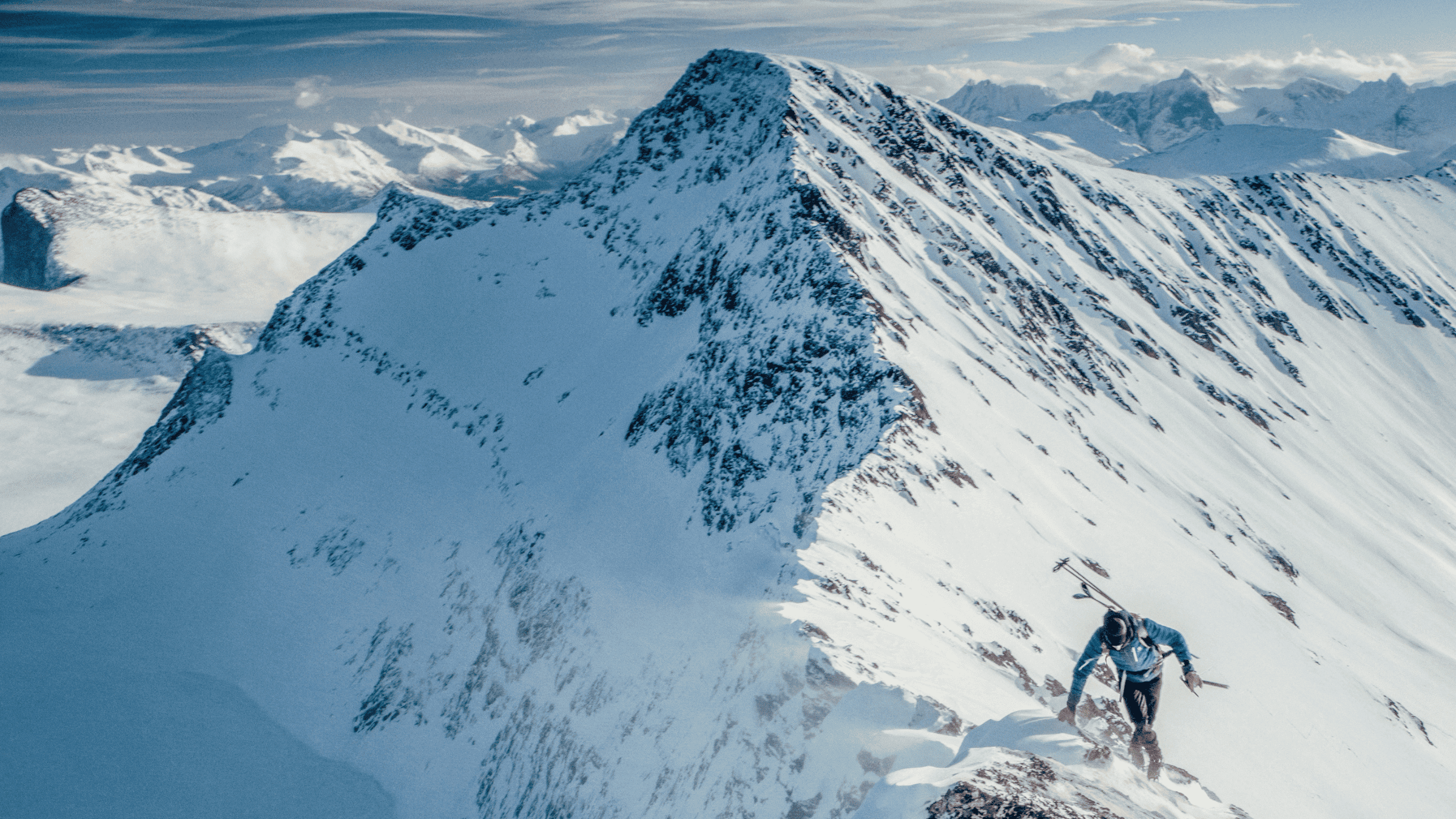
Hitting the gym is en vogue in the running community—helping to mitigate injuries, slow the loss of muscle with aging, and to reduce muscle fatigue during longer races. Jornet does a couple strength sessions each week, but primarily believes that most strength training is best done in the mountains.
On the downhill, I’m jumping one meter, two meters, and I need to control the fall or I die, so that’s strength training.
“If I’m climbing up a mountain, I’m getting stronger,” Jornet says. “On the downhill, I’m jumping one meter, two meters, and I need to control the fall or I die, so that’s strength training. I also do weights two times per week, but it’s very targeted. It doesn’t take long, like 20 or 30 minutes each session, four exercises at maximum weight and few repetitions. The science says you don’t need a lot, you just need to do it well.”
ADVERTISEMENT
Nutrition
Jornet and his wife Emily eat as much as they can from their garden and try to get the rest from the local supermarket, avoiding processed food whenever possible. He pays close attention to the macros in his food, but says how the food was produced and processed matters more as the numbers on the label.
“For example, the pasta in America is not the same as it is here,” Jornet says. “It’s not made with sourdough and it’s filled with chemicals, so it’s not the same nutrition. One hundred carbs from a potato in the garden is different from 100 carbs somewhere else. We eat a lot of fiber and fat too, but the most important thing is to get good quality foods.”
His Secret To Recovery
One of Jornet’s biggest recovery secrets is being able to say no. As a dad of three, a business owner, and a professional athlete, his social life is close to zero. He mitigates stress on his body by setting clear boundaries with work and friends, focusing on what he sees as important, starting with his family.
ADVERTISEMENT
“To get out and plan things would be too much of a stressor, so it’s OK,” Jornet says. “I prioritize what I need to do with work, interviews like this, but manage how many I do every month. If I do too much, I’m not with the kids and they do not sleep well, so it will be a worse night for us. I will be tired in the morning and I will train stressed, so it’s not just that one day. I try to keep a good circadian rhythm, to keep it sustainable.”
Keeping Training Fun
While competition is a major motivator for Jornet, this doesn’t mean he isn’t having fun. For the “boring” training sessions, Jornet says that seeing improvements or hitting a time goal makes the session fun and helps him work harder the next day. No data will keep him as motivated as having fun while training, so he focused on activities that are enjoyable to him when possible and exploring new places.
“I just love to be in the mountains, there’s no day where I would rather be in another place,” he says. “I never need to seek motivation to get out because it’s always there.”
