Updated October 15, 2025 02:02PM
You Probably Have Poor Running Form. Here’s How to Check.
Four exercises from a running medicine PT for assessing and addressing the source of your bad running form.
(Photo: Getty Images)
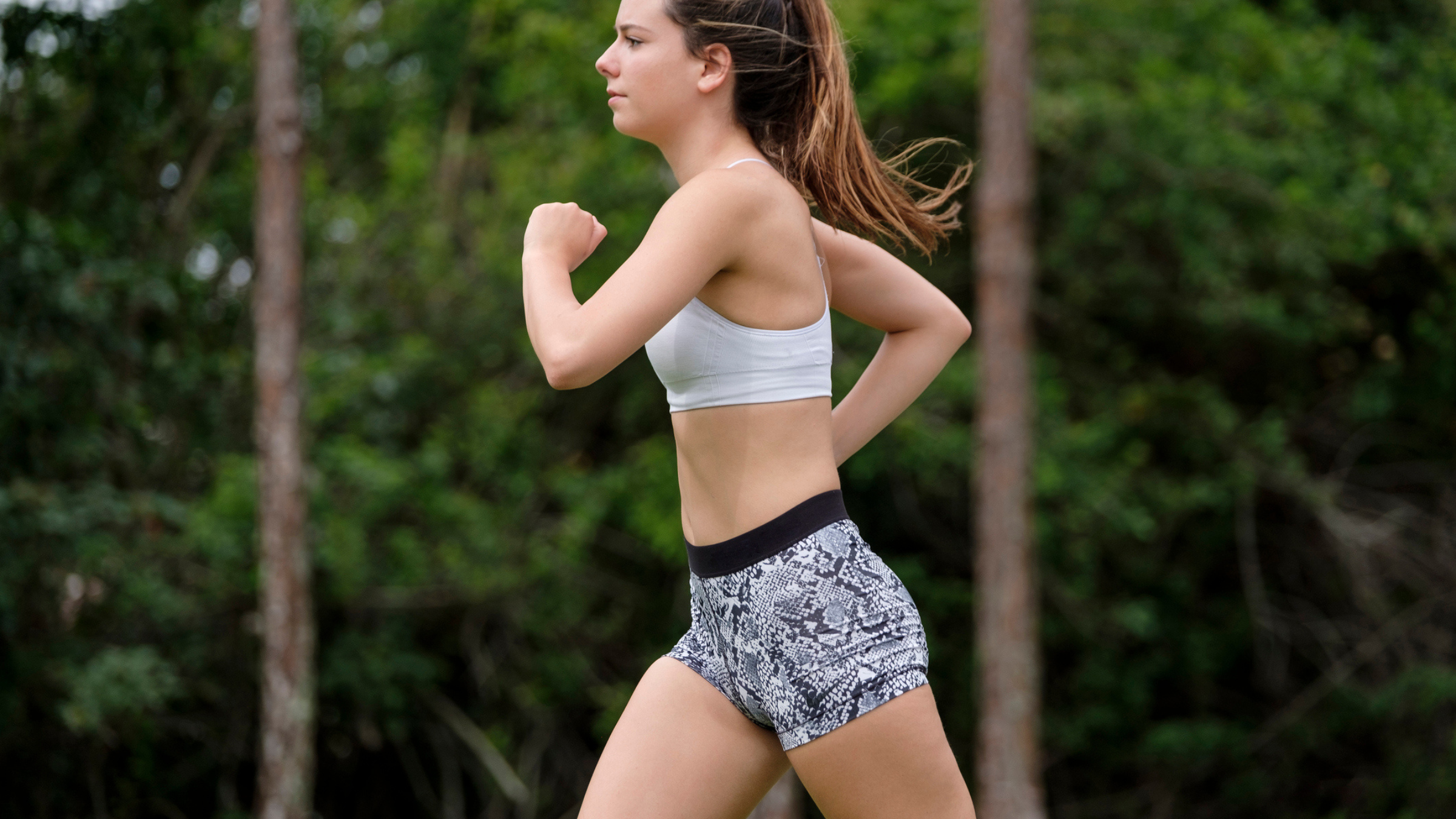
As a running medicine physical therapist, I frequently look at and assess running form in my clinic. Admittedly, I also find myself watching runners as they run by me at coffee shops, in the park, and on trails. While there is no such thing as perfect running form, there are people with an efficient stride and others who, well, look like a hot mess. When I see someone who has “bad form,” it is almost always an indicator that they have muscle weakness and range-of-motion deficits within their body.
When runners come to the clinic for treatment, my team and I take them through multiple functional tests before looking at their running form on the treadmill. These tests help us assess potential weaknesses that might be contributing to their poor running form, injury history, or even poor performance. Here are a handful of my favorite functional tests that you can do yourself to help you identify and improve some of your own form issues.
For all of the tests below, you can stand in front of a mirror or film yourself doing them on your smartphone. Just make sure that you are able to see your entire body from head to toe. Running is a full body activity, and it is important to see how your body moves at the foot, knee, pelvis, trunk, and even head.
Test 1: Single Leg Squat (Balance and Strength)
Why this test is important: When running, you are essentially jumping from one leg to the next. As you accept weight onto your leg, you have to bend at the knee to absorb and store that force. This causes you to do a single leg squat over and over.
Knee injuries are the most common running injury, and when you cannot control the motion at your knee or foot, it often leads to iliotibial (IT) band syndrome, anterior knee pain, among other issues.
How to test: Stand on one leg with your hands on your hips, and lift the opposite leg up so your hip is at 90 degrees and your foot is flexed. Squat on the standing leg by bending your knee.
Did you pass or fail?
If you have weakness in the hips, you will likely see that your knee moves into knee valgus (dives in) or your hip drops while doing this move. However, if you are losing your balance and your foot is pronating (collapsing in), you may also need to work on your foot and arch strength.
ADVERTISEMENT
Form issues you may have if this test is positive:
- Knee valgus (knee diving in)
- Hip drop
- Overpronation
How to fix your form issues
- Perform a standing clam shell without shoes. This improves single leg glute strength. Focus on keeping your hips even, pushing into your great toe, and keeping your foot strong and balanced.
- Improving your cadence by 3–5% may activate your glutes slightly and decrease the knee valgus (knee diving in). To do this, first determine your current cadence by checking your running watch or counting how many times your right foot hits the ground in a minute and multiply by two. Then multiply your cadence by 0.03. For example, if your cadence is 155 steps/minute, multiply 155 x 0.03 = 4.65. You can then increase your cadence by approximately 4 steps to be 159 steps/minute. To practice this, you can download a free metronome app and set it to your desired cadence while running. I would focus on listening to the beat intermittently throughout your run. Once you are good at matching the beat, try finding a playlist with your desired cadence. The goal is to eventually move from using an external cue like the metronome to recognizing what the new cadence feels like in your own body.
Test 2: Single Leg Heel Raise (Balance and Strength)
Why this test is important: When your foot hits the ground, fatigue in your lower leg muscles can alter mechanics and increase your risk for injury. The plantar flexors of the foot are active during push-off and must be strong enough to generate enough force to propel your body forward during gait. The single leg heel raise tests this muscle group’s strength and endurance.
Without strong plantar flexors, fatigue occurs more quickly, and common running injuries that involve the Achilles tendon and posterior tibialis become more likely.
How to test: Stand with one leg on a step and the opposite leg slightly behind you. Place your hands on your hips or finger tips against the wall or hold on to something for balance if you need to. Lift and lower your heel as high as you can slowly (ideally about 2-3 seconds to go up and down) and repeat 15-25 times.
Did you pass or fail?
During this test, we are looking for how many times you can lift and lower your heel, how high you are able to raise up onto your toes, and the quality of movement. Are you pushing off all of your toes or just a few of them? How is your balance? What is happening at the heel—is it wobbling or stable?
ADVERTISEMENT
Your goal is to be able to do 25 single leg heel raises with good control and height. You will “pass” if you can do at least 15 without difficulty and good control; however, 25 is ideal.
Form issues you may have if this test is positive:
- Decreased hip extension
- Increased vertical oscillation (bounce)
- Knee valgus (knee diving in)
- Overpronation
How to fix your form issues
If you are unable to do 10 single leg heel raises, then begin by practicing bilateral, eccentric heel raises. Lean against the wall with your forearms, and lift and lower your heels focusing on pushing off with all of your toes, minimizing the wobbling at the heel and slowly lowering down. Do 3×10 reps 3x/week and slowly progress to single leg as your strength and endurance improves. Eventually you can even add weight.
Test 3: Single Leg Glute Bridge (Strength)
Why this test is important: A single leg glute bridge assesses a lot at once if you pay attention. It can give you an idea if you have strong pelvic stability, what your posterior chain strength is, if you are more inclined to use your hamstrings, lower back, or glutes to extend your hips, and if you are tapping into your deep core or not.
Compensation patterns are common in runners and this simple test helps us to sift through some of those patterns.
ADVERTISEMENT
How to test: Perform this test on the floor. Lie on your back with your knees bent, your feet flat on the floor, and your arms at your sides. Extend one leg out and lift it to the level of your opposite, bent knee. Lift your hips off the ground and hold for 3-5 seconds then lower. Repeat 2-3 times on each side.
Did you pass or fail?
In this test we are looking to see if you are able to keep your hips level when you lift your hips. If you are looking toward your knees, your hips should lift high enough that your thighs are in a straight line from knee to hip, but you should not be arching your back. Are you holding your breath? Do you get a cramp in your hamstrings? Can you perform the movement so that your hips lift off the ground enough?
ADVERTISEMENT
Form issues you may have if this test is positive:
- Decreased hip extension
- Poor running posture (how head, rib cage and trunk stack over pelvis)
- Knee valgus (knee diving in)
- Hip drop
- Hip adduction
How to fix your form issues
- If you are holding your breath, then start paying attention. Holding your breath means that you are not using your deep core to its fullest potential, and it may even be impacting your pelvic floor. Actively think about inhaling and exhaling as you exercise.
- Practice glute bridges. Start with bilateral glute bridges putting a band just above the knees. Inhale, press into the band, and lift your hips up, maintaining a level pelvis and exhale while you lower. Focus on pressing your weight through your entire foot as you lift. Once you are able to perform this easily 3×20 with good control, you can begin to practice single leg bridges.
Test 4: Knee to Wall Test for Ankle Dorsiflexion (Mobility)
Why this test is important: Ankle dorsiflexion is crucial because without it, we compensate at the foot, ankle, knee, and hip. Decreased dorsiflexion can lead to overpronation, knee valgus, and hip adduction—all biomechanical issues that put runners at high risk for injury and decrease running efficiency.
How to test: You will need a tape measure and a wall for this test. Place the tape measure flat on the ground perpendicular to the wall. Stand facing the wall in a lunge position. Make sure that your foot and knee are pointing forward. Lunge forward toward the wall, keeping your foot and heel on the floor and bringing your knee closer to the wall. If your knee does touch the wall, bring your foot farther away. Measure the distance between your big toe and the wall at the point when your knee can touch the wall without your heel lifting. Repeat on both sides.
Did you pass or fail?
- There are two things to pay attention to here. What is the difference between your left and right, and what is the distance from your big toe to the wall? The ideal distance from your big toe to the wall (with your knee touching) is 10-15 cm.
- If your ankle dorsiflexion is less than 10 cm and/or if there is a difference more than approximately 2-2.5 cm between sides, you will need to improve your dorsiflexion.
Form issues you may have if this test is positive:
- Overpronation
- Decreased hip extension
- Hip adduction
- Knee valgus (knee diving in)
- Hip drop
ADVERTISEMENT
How to fix your form issues
- If tightness is in the front of the ankle with a negative test, then the restriction is probably due to a lack of joint mobility. To improve this, you could do a self and dorsiflexion mobilization with a band. Tie a band in a loop and anchor it to something that will not move when it is pulled on. Typically the leg of a table, weight rack or bottom of the stairs works well. Repeat the test, but this time have one part of the band secured behind you, place your foot into the loop and have the other end of the band in place around the ankle joint. Repeat the test with the resistance of the band creating space in the joint.
- If tightness is in the front of the ankle with a negative test, then the restriction is probably due to tightness in the plantar flexor muscles. To stretch these muscles, stand with one foot touching a wall and the other foot staggered behind you in a lunge position. Make sure that the toes of both feet are facing forward and your ribs are stacked over your pelvis to maintain good posture. You do not want to bend from the hips and stick your butt out. Maintain your heel on the ground and slightly lean forward creating a stretch in the back of the calf muscle. You can have your hands on the wall. Hold for at least 45-60 seconds and repeat 2-3x with your back knee straight then bent.
