Updated July 10, 2025 02:29PM
The Basics of Arm Form for Runners
Runners typically focus on their foot strike, cadence, or stride length when they are thinking about their running form, and while running is a leg-dominant activity, your arm swing also plays an important role in your running economy and pace.
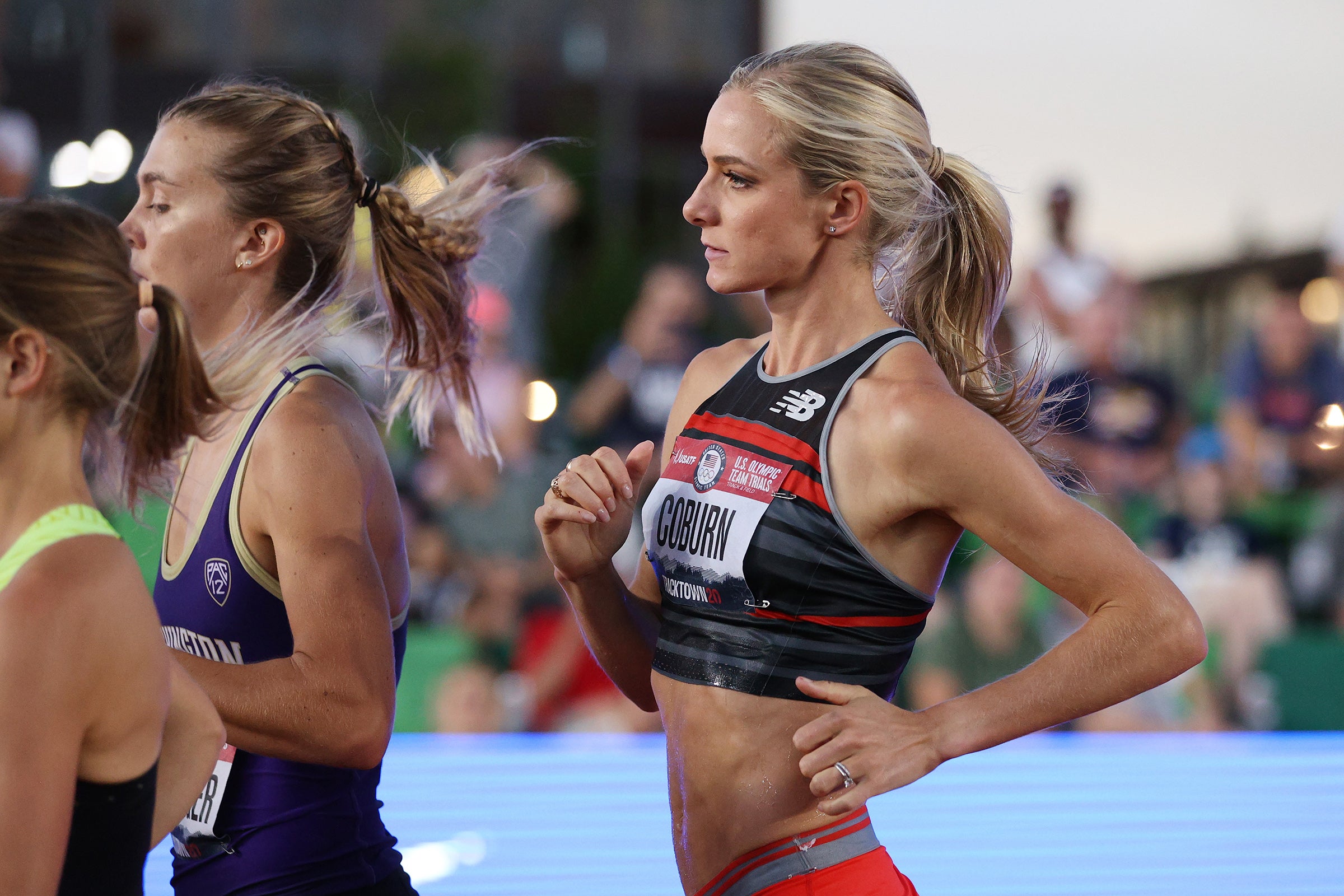
Emma Coburn competes the women's 3,000 meter steeplechase final on day seven of the 2020 U.S. Olympic Track & Field Team Trials at Hayward Field on June 24, 2021 in Eugene, Oregon. (Photo: Patrick Smith/Getty Images)
Swinging your arms when you run helps propel your body forward, but the arm swing component of running form isn’t as simple as it looks. Various deviations from the ideal arm swing for runners, such as swinging your arms too vigorously, swinging them too far across your body, or not swinging your arms enough can compromise your running economy.
Keep reading to learn more about the proper arm form for runners and actionable tips for how to improve your arm swing when you run.
RELATED: A Head-to-Toe Reset for Good Running Form
Why is Arm Swing Important for Running?
While your legs might be actually getting you from point A to point B when you run, your arms aid in balance and provide momentum and power to help drive your legs forward. Essentially, your arms propel you forward, help get your body airborne with each stride, and guide your overall running rhythm.
As such, good arm form while running can reduce the workload on your legs and your overall energy expenditure when you run. In fact, studies show swinging your arms when you run reduces energy expenditure from 3 to 13%.
ADVERTISEMENT
Does Pumping Your Arms Make You Run Faster?
Research has shown that restraining your arm swing can reduce your running economy.
Pumping your arms can potentially help you run faster as your arm cadence ultimately drives your turnover. The faster you move your arms, the faster your feet need to go to keep up. Of course, an overly exaggerated arm swing can waste energy, so try to keep things reasonable and sustainable.
Proper Arm Form for Running
So what does proper arm swing look like for runners? Here are the general goals for the arms swing component of your running form:
ADVERTISEMENT
Bend Your Elbows 90 Degrees
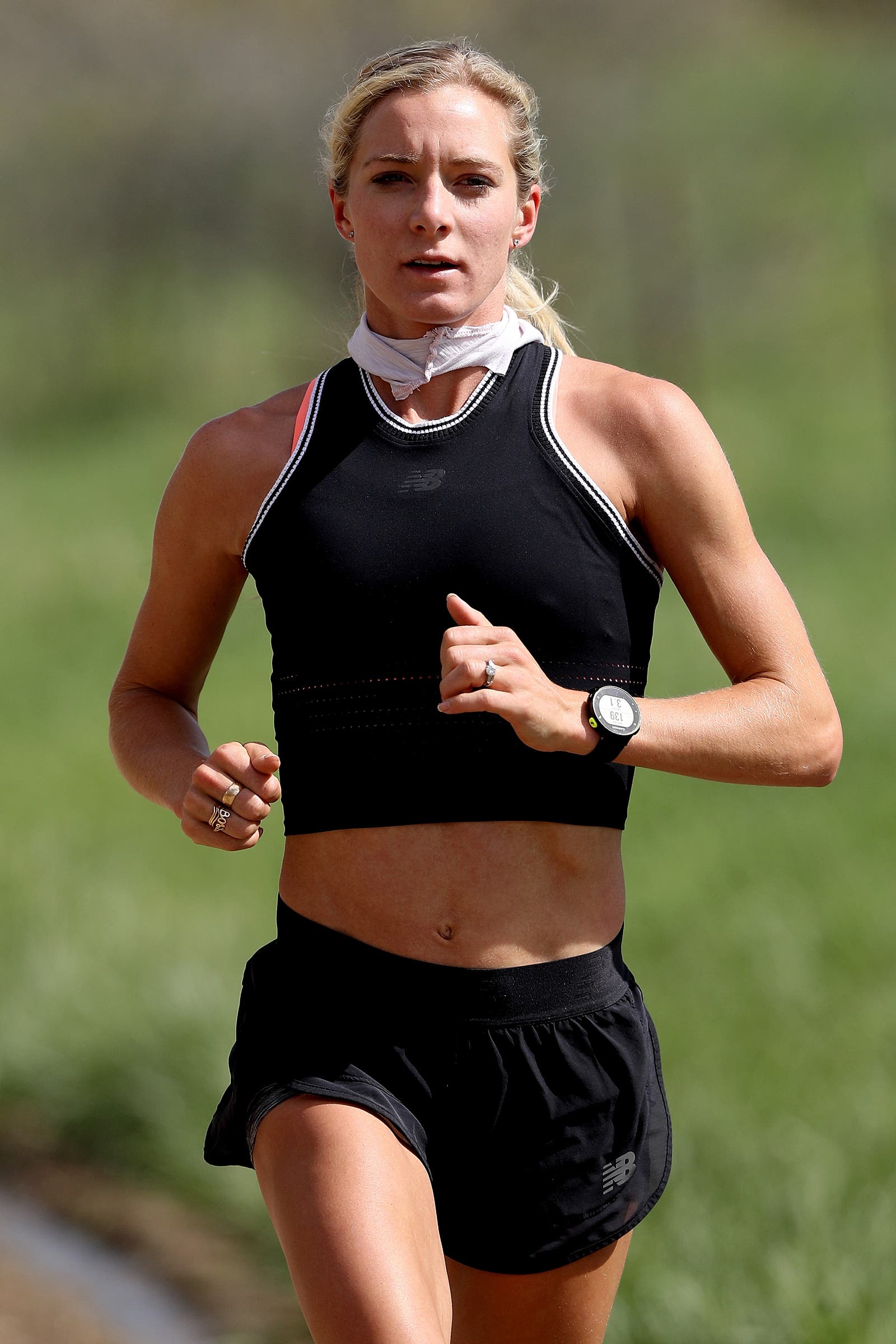
Your elbows should be very close to a 90-degree angle when you’re running along flat ground. When running uphill, this angle can become more acute (less than 90 degrees), and more obtuse (greater than 90 degrees) when running downhill. Ideally, your forearm should be roughly parallel to the surface of the road when you’re in the neutral part of the arm swing.
Don’t Swing Your Arms Across Your Body
You want your arms to swing forward and backward like your legs, minimizing as much side-to-side motion as you can. Just as it would be inefficient and a waste of energy to zig-zag your legs like egg beaters during your running stride instead of just reaching them straight forward, rocking your arms toward the midline of your body is a waste of energy.
ADVERTISEMENT
Lateral motion doesn’t transfer to forward motion and it comprises your momentum and running economy. It also causes excessive rotation of your torso, hips, and spine, which can strain your back. Try to ensure your arms don’t cross over the midline of your body.
Similarly, swing your arms straight backwards, not outwards. Think about gently grazing your sleeve or arm along the ribs (though try not to actually touch or you might experience chafing!) by keeping your elbows tucked in, not flared out.
Swing Your Arms From the Shoulders
Some runners don’t take advantage of the full leverage they have in their arm swing, and they really only swing the arms from the elbow. Your arm swing should be generated from your shoulders, which should remain relaxed and as stationary as possible.
Relax Your Hands
Your hands should be relaxed and in a loose fist, as if cupping a precious butterfly or trying to loosely hold, but not crush, a potato chip. Clenching your fist leads to muscle tension up your arm, which will cause undue fatigue and reduce your running economy.
ADVERTISEMENT
Tips to Improve Your Arm Swing
There are several ways you can improve your arm swing and running form. It’s often helpful to have someone take a short video of you running so you can examine your arm swing and critique your overall running form. You can also try running in front of a mirror on a treadmill.
Think “Back and Down”
If your shoulders tend to ride up and get tense when you run, use the mantra “back and down” as you run to remind yourself to stay loose.
Don’t Cross the Line
Envision an electric fence running down from your chin to your belly button. Don’t allow your hands to cross this midline when you run.
ADVERTISEMENT
Hold a Potato Chip
That’s right: take an actual potato chip with you in each hand and try to have it survive intact in your relaxed hands during your entire run.
Drive Your Elbows Back
Focus on driving your elbows straight back if your arms usually flare outward.
Strengthen Your Arms
Try this arm swing exercise to boot your arm drive:
- Grab two pairs of dumbbells: If you’re fairly strong, a pair of 10-pound dumbbells and a pair of 5-pound dumbbells; beginners start with a pair of 5-pound dumbbells and a pair of 3-pound dumbbells.
- Holding the heavier dumbbells in each hand, rapidly pump your arms in an exaggerated running motion (as if sprinting to the finish of a 100m dash) for 30 seconds. Count how many reps you can do over the 30 seconds.
- Keep your core tight and stagger one foot in front of the other for balance if it’s more comfortable.
- Take 30 seconds of rest, and then repeat with the lighter dumbbells. Again, count your reps, aiming to beat the number you got for the heavier set by 20% or more.
- Finally, ditch the weights and repeat the exercise, pumping your arms as vigorously and rapidly as you can. Your arms will feel light, and you should be able to crank out a ton of reps.
Repeat this exercise several times per week. It will build strength, power, and speed in your arm swing that can carry over to your running cadence.
ADVERTISEMENT
Improving your arm form when you run can not only alleviate muscle aches and strains, but may help you run just that much faster, making your dream PR now within reach.
